
If you have ever stood at the edge of a yoga class listing — Hatha, Yin, Vinyasa, Ashtanga — and felt quietly unsure which door to walk through, you are not alone. Most of us arrive at yoga through a single teacher or a single video, and only later wonder how the many paths fit together. This gentle guide is our attempt at having the styles of yoga explained without jargon or pressure, so you can choose the practice that truly meets you where you are.
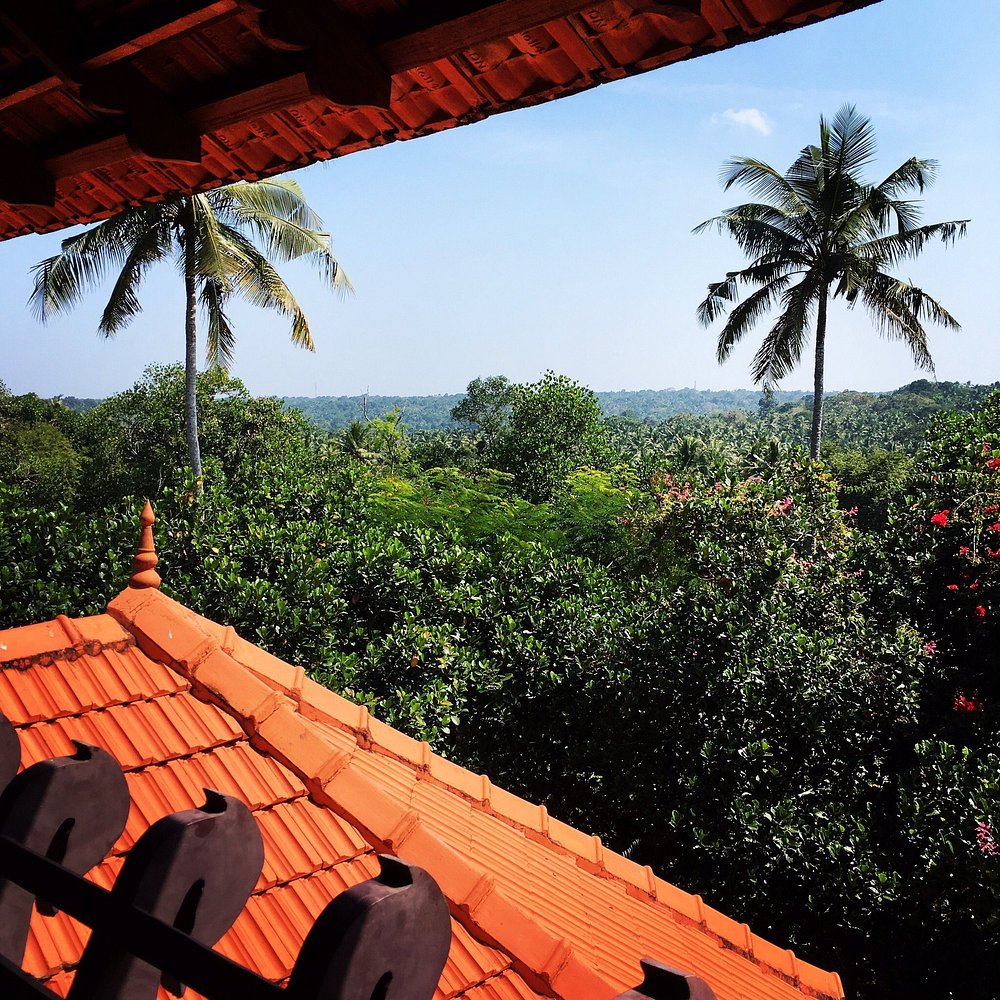
Here at Amrutham, tucked among the coconut palms of Kovalam in Kerala, we watch guests soften into their practice a little more each morning. What follows is written in that same unhurried spirit — an invitation, never a prescription.
Styles of yoga explained: why the labels exist at all
Yoga is far older than any of its modern brand names. The word itself means union — of breath and body, of attention and stillness. Over centuries, teachers emphasised different doorways into that union, and those emphases slowly hardened into the "styles" we recognise today. Understanding the family tree makes the choices feel less bewildering. If you enjoy tracing origins, the history and philosophy are well summarised in this overview of Hatha yoga on Wikipedia, from which most physical practices descend.
Rather than ranking one style above another, it helps to notice what each one asks of you: how much movement, how much stillness, how much heat, how much breath. Once you feel those variables, the labels become friendly signposts rather than a test you might fail.
Hatha yoga — the patient foundation
Hatha is the root system beneath nearly everything else. In a classical Hatha class you hold postures (asana) for several steady breaths, pausing between them to feel their effect. The pace is deliberate. Nothing rushes.
- Best for: beginners, and anyone wanting to relearn the fundamentals with care.
- You can expect: alignment, conscious breathing (pranayama), and time to notice sensation.
- Traditionally used for: building strength, mobility and a calmer nervous system.
Because it is unhurried, Hatha is where many of our guests begin. It teaches the vocabulary that every other style then speaks in its own accent.
The flowing and the still: Vinyasa, Ashtanga and Yin
Once the foundations feel familiar, the paths branch. Some quicken until the breath grows audible and the skin warms; others slow almost to silence, holding a single shape long enough for the mind to settle. Neither is better — they simply serve different days and different needs.
- Vinyasa: postures linked in a continuous flow, each movement paired with an inhale or exhale. Warming, rhythmic, a little like a moving meditation.
- Ashtanga: a set, demanding sequence practised in the same order each time. Structured and vigorous, it rewards discipline and repetition.
- Yin: long, passive holds of three to five minutes that gently stress the deeper connective tissue. Cooling and introspective, Yin can help relieve stiffness and quiet a restless mind.
- Restorative: fully supported poses held in comfort, often with bolsters and blankets — rest as its own practice.
Notice how they mirror one another: Vinyasa and Ashtanga generate heat and momentum, while Yin and Restorative invite you to stop and listen. A whole practice life can move between these poles as your body and seasons change. You can explore how we hold this range across our yoga offerings, shaped for different temperaments and levels.
Styles of yoga explained through your own constitution
This is where Ayurveda, India's traditional system of medicine, offers something quietly brilliant. Ayurveda understands each person through their constitution (Prakriti) — the unique balance of energies that shapes body and temperament. Seen this way, the styles of yoga explained above are not competitors but medicines, each suited to a different tendency.
- If you run warm and driven: cooling, slower practices such as Yin or gentle Hatha may bring balance.
- If you feel scattered or anxious: grounding, steady sequences with long exhalations can settle the digestive fire (agni) and the mind.
- If you feel heavy or slow to start: warming, flowing Vinyasa can awaken energy.
None of this replaces professional guidance — if you carry an injury or a health condition, please consult a qualified practitioner before beginning. But as a lens, matching practice to constitution turns yoga from a generic workout into something genuinely personal. For those who wish to go deeper into teaching and philosophy, our yoga teacher training explores these threads at length.
The M·A·Y lens: yoga as one of three at Amrutham
At Amrutham we hold yoga within a wider frame we call M·A·Y — Meditation, Ayurveda and Yoga — three practices that support and complete one another. Asana prepares the body to sit; Ayurveda tends the constitution that shapes both; meditation gathers what movement has stirred. Together they guide what we like to call a "U-turn inward".
Underneath sits our simple compass, the A.C.E. framework — Awareness, Contentment and Equanimity. It is less a curriculum than a direction of travel. Whichever style you practise, these are the qualities we hope grow quietly within you, mat by mat, morning by morning.
Bringing your practice home to Kovalam
Amrutham is an intimate place — only eight rooms — set near Vellayani Lake in Kovalam, about thirty minutes from Trivandrum international airport. That smallness is deliberate. It lets teachers watch how you actually breathe and move, and adapt the practice to you rather than to a crowded room.
Mornings here begin gently: birdsong, warm water, a sattvic (vegetarian) breakfast after practice, and the unpressured space to try Hatha one day and Yin the next until something feels like yours. If a longer immersion calls to you, our residential retreats weave yoga, Ayurveda and meditation into a single unhurried rhythm.
Whatever brought you to this page — curiosity, a stiff back, a longing for stillness — we hope the many styles now feel less like a maze and more like a garden of doors. When you are ready to step through one with us, we would be glad to walk beside you.


