
There is a quiet moment, somewhere in the middle of a deep Ayurvedic training, when the learning stops being about technique and becomes something steadier — a way of seeing the body, the breath, and another person's wellbeing all at once. For many who arrive at that moment, a natural question follows: where can this go? If you are weighing the panchakarma course career opportunities that a serious certification can open, it helps to look honestly at the landscape — what the work is, where it is needed, and what kind of life it can quietly support.
Panchakarma — the classical fivefold cleansing (literally "five actions") at the heart of Ayurveda — is among the most sought-after of all traditional therapies. To learn it well is to hold a skill that travels: across wellness centres, clinics, retreats, and your own practice, in India and far beyond.
What panchakarma actually trains you to do
Before the career, the craft. Panchakarma is not a single treatment but a sequenced process of purification designed to clear accumulated toxins (ama) and restore balance to the constitution (Prakriti). A capable practitioner learns to read the body, prepare it, and guide it through cleansing with patience and care.
The core competencies you build typically include:
- Preparatory therapies: oleation through oil massage (Abhyanga) and herbal application, and sudation (Swedana) to ready the tissues.
- The cleansing procedures: the classical fivefold actions, applied thoughtfully and only where appropriate.
- Specialised treatments: such as the gentle, continuous oil-pouring of Shirodhara, traditionally used to settle the mind.
- Post-care and diet: guiding the rebuilding phase that makes the cleanse hold.
If you would like to feel the therapies before you train in them, a short Detox package or our Ayurveda package lets you experience panchakarma from the receiving side first — often the most honest introduction there is.
The panchakarma course career opportunities open to you
A genuine certification widens your options rather than narrowing them. The work tends to find people who are patient, observant, and steady with their hands. Among the panchakarma course career opportunities most graduates explore:
- Ayurvedic therapist at a wellness centre, spa, or hospital, supporting qualified physicians and delivering therapies.
- Retreat and resort practitioner, where panchakarma is central to the guest experience.
- Independent practitioner, offering treatments through a small studio or home practice.
- Wellness coordinator or programme designer, shaping cleansing journeys for clients.
- Educator and assistant trainer, once experience deepens.
Demand is not confined to India. As interest in traditional and integrative medicine grows worldwide — a shift the World Health Organization's work on traditional, complementary and integrative medicine reflects — well-trained therapists are increasingly welcomed at retreats and wellness centres across Europe, the Gulf, and Southeast Asia. Kerala, the birthplace of much of this tradition, carries a recognised name that travels with you.
It helps to be realistic, too. Many practitioners begin as part of a team — assisting, observing, building hours — before they lead treatments on their own. Others weave panchakarma skills into an existing wellness career, adding depth to massage or yoga work they already do. There is rarely a single straight line; the craft tends to grow in seasons, and the steadiness you bring to each stage tends to shape where it leads.
What shapes the panchakarma course career opportunities you can reach
Not all training is equal, and the panchakarma course career opportunities available to you depend less on a certificate's wording than on what you can actually do. A few things matter more than they may seem:
- Hands-on hours: employers and clients trust practised hands. Real treatment time on real bodies is the heart of any worthwhile programme.
- Classical grounding: understanding why a therapy is chosen, not only how to perform it, is what separates a technician from a practitioner.
- The setting you learn in: training inside a working Ayurvedic environment, with qualified practitioners, teaches the rhythm of real care.
- Complementary skills: a strong foundation in massage widens what you can offer — many therapists pair panchakarma with the techniques taught in the Massage Course.
How a 21-day certification builds toward a livelihood
A focused, immersive course gives you something a scattered, part-time study rarely can: continuity. Living and learning in one place, you move through preparation, cleansing, and recovery as a single rhythm — the way panchakarma is actually practised. Over three weeks, the sequences begin to feel familiar in the hands rather than memorised in the head.
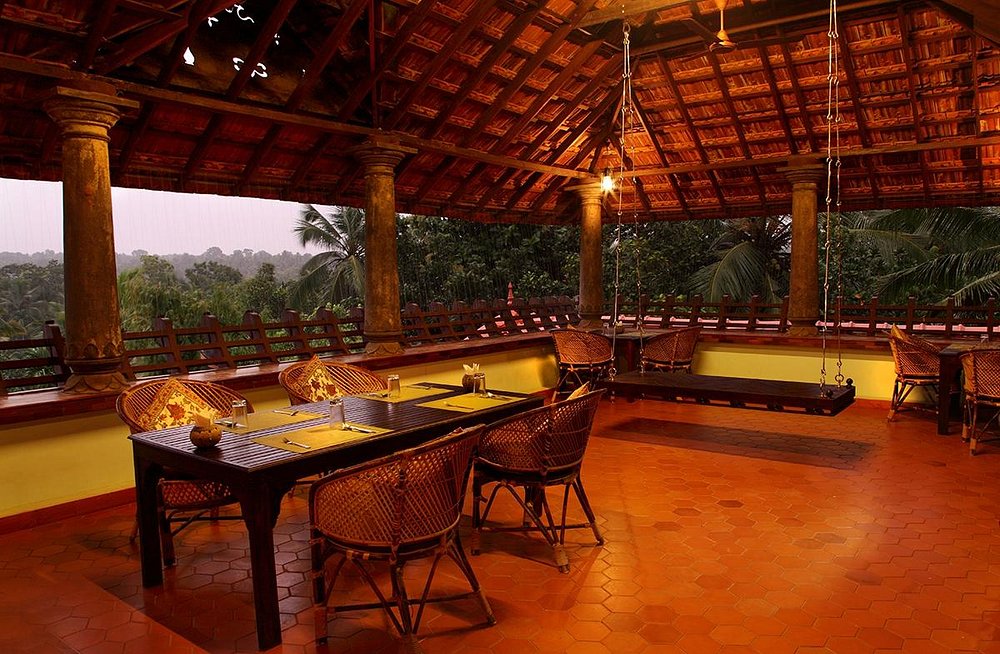
Our 21-Day Panchakarma Certification is built around exactly this kind of unhurried, hands-on immersion in Kovalam, Kerala — close enough to Trivandrum (Thiruvananthapuram) international airport to reach easily, and quiet enough that the learning has room to settle. You train where the therapies are practised daily, alongside qualified practitioners, in a small and unhurried setting. To see how it sits within our wider teaching, you can browse all of our courses.
What an immersion of this length offers is repetition with feedback — the same sequences, day after day, watched and corrected by someone who has done them for years. That is how confidence is built, and confidence, more than any document, is what employers and clients can sense in a practitioner's hands. By the end, the aim is not that you have seen panchakarma performed, but that you have performed it enough to trust yourself.
Choosing the work for the right reasons
It is worth saying plainly: this is care work. The most fulfilled practitioners we meet are drawn less by the income and more by the privilege of helping another person feel clearer, calmer, and more at home in their body. The livelihood follows the devotion, rarely the other way around. Ayurveda is best learned and practised in honest partnership with qualified guidance, and a responsible practitioner always knows the limits of their role and when to refer onward.
If that resonates — if you feel a pull toward a craft that is both ancient and quietly needed — then the path is open. Tuition, dates, and what to expect are best discussed directly, so the decision is made with clarity rather than haste. Whatever you choose, may it be a step toward work that feels like a return to yourself.
When you are ready, we would be glad to walk you through the programme, the daily rhythm, and the life it can lead to.


