
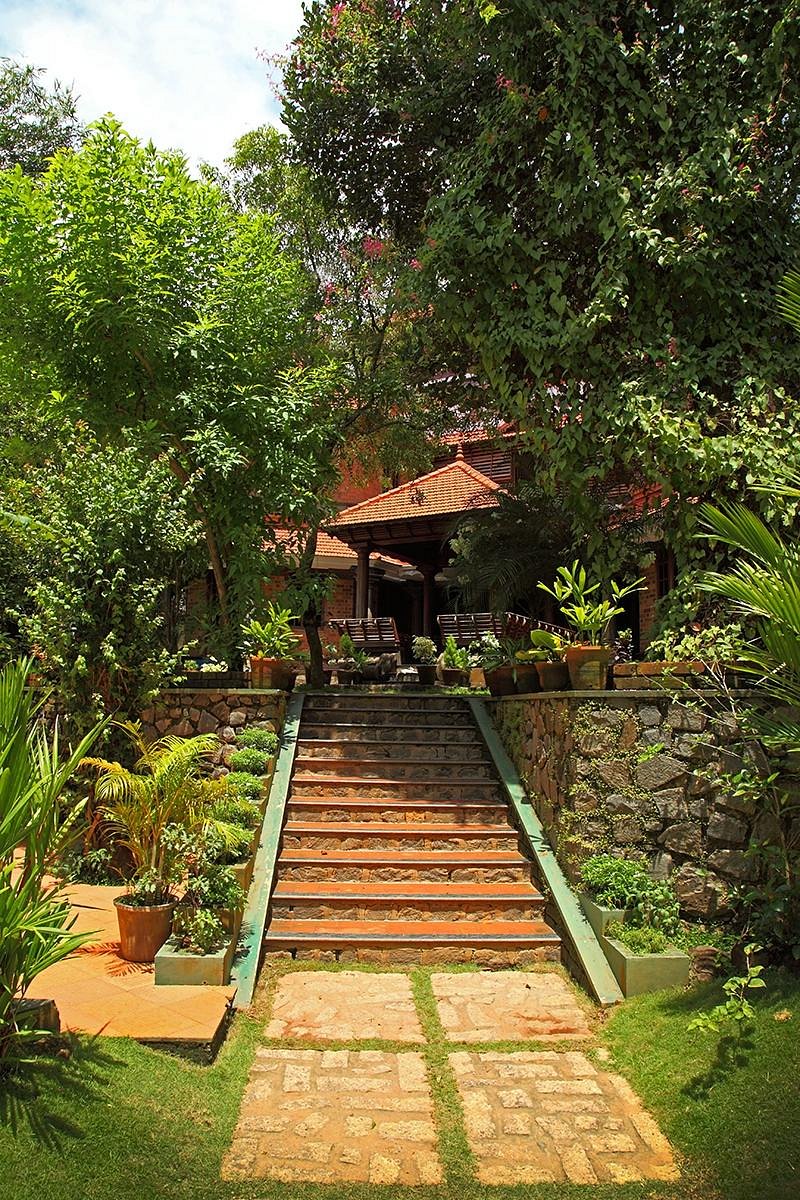
Perhaps you have felt it for a while now — a quiet pull towards the deeper currents of Ayurveda, a wish not only to receive its therapies but to learn to give them. That impulse is a beautiful one, and it deserves a clear-eyed answer. Before you commit your time and heart, it helps to understand the panchakarma course eligibility requirements — who a certification is really for, what you genuinely need to begin, and what you do not.
So let us walk through it gently, the way we would over chai on the verandah. No pressure, no checklist anxiety — just honest guidance to help you decide whether this path is yours to take, here in Kovalam or wherever your study eventually leads.
What Panchakarma is, and why training matters
Panchakarma — literally the "five actions" — is the classical Ayurvedic system of deep purification, designed to loosen and remove accumulated toxins (ama) and restore balance to the body's constitution (Prakriti). It is not a spa menu. It is a sequenced clinical process — preparation through internal and external oleation, therapeutic heat, and then the cleansing actions themselves — that asks the practitioner to read the person in front of them, not just follow a recipe.
Because the work is so intimate and so individualised, training matters. A good certification does not merely teach techniques; it cultivates the discernment to know when a therapy serves, when it should wait, and when it should not be given at all. That responsibility is precisely why eligibility exists — to make sure those who learn are ready to learn well.
The core panchakarma course eligibility requirements
Across reputable programmes, the foundations tend to rhyme. While each institution sets its own terms, most share a similar spirit. Here are the eligibility requirements you can reasonably expect for a serious panchakarma certification:
- Age and maturity: usually eighteen or above. This is hands-on, body-centred work, and a certain steadiness helps.
- Basic education: completion of secondary schooling is typically enough for foundational courses. Advanced or clinical streams may ask for a health-care or Ayurveda background.
- Physical capability: massage and therapy work is gently demanding on the hands, back, and stamina. You should be in reasonable health.
- Working English (or the language of instruction): enough to follow anatomy, contraindications, and oral teaching.
- Sincerity of intention: an honest wish to learn the tradition with respect — not merely to add a certificate to a portfolio.
Notice what is not usually required: you need not be a doctor, and you need not already speak Sanskrit. A genuine beginner with an open heart is welcome on most foundational paths. The deeper, clinical certifications naturally raise the bar — and that is as it should be.
Do you need prior Ayurveda experience?
This is the question we are asked most, and the honest answer is: it depends on what you are training for. For a foundational therapy or massage certification, prior experience is rarely mandatory — curiosity and commitment carry you further than a credential. If you are entirely new, it can help to begin with bodywork before deeper purification; many students find the Massage Course a natural first doorway into touch, oil, and the marma points that panchakarma later builds upon.
For advanced clinical panchakarma — the kind involving the full purificatory procedures — programmes increasingly prefer applicants with some grounding in Ayurveda, yoga therapy, or allied health work. If that describes you, you will move faster and absorb more. If it does not, do not be discouraged: every master therapist was once a beginner who simply started.
You can read more about Ayurveda as a living tradition through the Panchakarma entry on Wikipedia, which offers a useful general overview of the five actions and their classical context.
Health, honesty, and self-assessment
Beyond the formal panchakarma course eligibility requirements lies a quieter form of readiness — the willingness to look honestly at yourself. Training in purification therapies often stirs your own healing too. Long days, oil-warm hands, early practice — the work asks something of you.
- Be candid about your own health: disclose any conditions, pregnancy, recent surgery, or medication when you enrol, so teaching can be adapted safely.
- Consider the rhythm of residency: living and learning in one place, often immersed in sattvic (vegetarian) food and a slower pace, is part of the formation — not a side note.
- Notice your motivation: are you drawn to serve others, to deepen your own practice, or to change careers? All are valid; clarity simply helps you choose the right depth of course.
If you are unsure where you stand, sometimes the wisest first step is to receive before you learn to give. Experiencing a guided cleanse — through our Detox package or a foundational Ayurveda package — can tell you more about your readiness than any form. To feel the work in your own body is to understand, finally, what you would one day be offering another.
Choosing where to study
Eligibility is only half the question; the other half is fit. A certification is a relationship — with teachers, with a place, with a tradition. When you weigh your options, look beyond the certificate to the texture of the learning itself:
- Class size: smaller cohorts mean more hands-on time and closer mentorship.
- Qualified teachers: practitioners grounded in classical Ayurveda, who teach from experience as well as text.
- Setting: a quiet, nature-immersed environment supports the inward turn that this study quietly invites.
- Honesty of scope: a programme that is clear about what it does and does not certify you to do.
Here in Kovalam, near the still waters of Vellayani Lake, our certifications are kept deliberately intimate. You can explore the full range across our courses and find the depth that matches where you are today — whether that is a first foundation or a fuller clinical immersion.
A gentle closing word
Meeting the eligibility requirements is the beginning, not the destination. What truly qualifies you is steadier and harder to measure — a patient willingness to learn, a respect for the tradition, and the humility to keep beginning again. If that quiet readiness is stirring in you, perhaps it is time to take the next honest step.
At Amrutham, we would be glad to walk that path with you — slowly, attentively, in the way Ayurveda was always meant to be taught. When you are ready, we are here.


