
Before any deep cleanse can begin, the body must first be softened — and in Ayurveda, that softening has a name: Snehana, the practice of oleation. Long before the dramatic-sounding therapies of Panchakarma (the classical five-action purification) ever begin, days are quietly given over to oil — taken inwardly as medicated ghee, and worked into the skin as warm-oil massage. It is the gentlest part of the whole journey, and yet, traditionally, it is considered the part that makes everything else possible.
If you have ever wondered why a serious detox doesn't simply start with cleansing, the answer lies here. Cleansing without preparation is like wringing out a dry cloth — you risk tearing the fibres. Oleation soaks the cloth first. Only then does it release what it holds.
What Snehana Oleation Actually Means
The Sanskrit word Snehana comes from sneha, which means both "oil" and "love" — a quiet hint at how this therapy is understood. To oil the body is, in a sense, to show it tenderness. In classical practice, Snehana is one half of the preparatory phase known as Purvakarma (the "before-action" stage that readies the body for the main cleanse). Its companion is Swedana (therapeutic sweating, usually a herbal steam), which follows oleation to open the channels further.
Oleation works in two complementary directions, inner and outer, and a well-designed programme uses both:
- Internal oleation (Snehapana): small, carefully measured doses of warm medicated ghee (clarified butter infused with herbs), taken on an empty stomach over several mornings. The amount is increased gradually as the body's digestive fire (agni) accepts it.
- External oleation (Abhyanga): a full-body warm-oil massage, performed by trained therapists with herb-infused oils chosen for your constitution (Prakriti). The strokes are rhythmic, unhurried, and follow the direction of the tissues.
The two are not interchangeable. Internal oleation reaches the deeper tissues from within; external oleation softens the muscles, joints, and skin from without. Together they prepare the whole body — surface to centre — for what follows. You can read more about this preparatory step in our overview of the Panchakarma detox journey.
Why Oil "Loosens" the Toxins
To understand Snehana, it helps to picture how Ayurveda imagines impurity. Undigested residue and metabolic waste — collectively called ama (toxins) — are described as sticky, cold, and heavy. They cling to the channels and tissues the way old grease clings to the inside of a pan. Scrubbing alone won't shift it; warmth and oil will.
This is the logic of oleation. The principle that like dissolves like is, interestingly, not unique to Ayurveda — it echoes the basic chemistry of lipophilicity, the way fat-soluble substances dissolve into fats rather than water. In Ayurvedic terms, the oil's own unctuous quality (snigdha) meets the lodged ama, loosens its grip on the tissues, and coaxes it free. Once mobilised, these loosened impurities are guided back toward the digestive tract — the body's natural exit route — where the main cleansing actions can finally carry them out.
Seen this way, Snehana is not the cleanse itself. It is the unsticking that comes before it — the patient work of bringing what is buried up to the surface, so that the deeper therapies have something to clear.
Snehana Oleation as the Heart of Purvakarma
Panchakarma is often described by its five main actions — the eliminative therapies that remove accumulated doshas. But experienced practitioners will tell you that the success of those actions is decided earlier, during preparation. Rush the oleation, and the cleanse is harsher and less complete. Honour it, and the body releases more willingly, with far less strain.
A typical preparatory arc unfolds gently:
- Days of internal oleation: medicated ghee in rising doses, watched closely until the body shows it has absorbed enough — a process read through subtle signs by your practitioner, never by a fixed clock.
- Daily external oleation: warm-oil Abhyanga, often followed by Swedana (herbal steam), to draw the loosened ama from the tissues toward the gut.
- A quiet, supportive routine: simple warm food, early rest, and stillness — so the body can spend its energy on the work within rather than on the world without.
This is also why Snehana cannot be self-prescribed from a video or a blog. The dose of ghee, the choice of oils, the length of the phase — all depend on your constitution, your current imbalance, and how your body responds day to day. A genuine cleanse is always guided. Our classical Ayurveda programmes are built around exactly this kind of individual, practitioner-led care.
What Snehana Oleation Feels Like
For all its physiological purpose, oleation is, simply, one of the most comforting experiences in Ayurveda. The internal ghee, taken warm at dawn, is a strange and steadying ritual — not delicious exactly, but grounding, like a small daily promise to yourself. And the external massage is pure ease: warm oil, warm hands, and the slow loosening of tension you didn't know you were holding.
Many guests describe the oleation days as a softening of more than the body. As the channels open, sleep often deepens, the mind settles, and the restlessness of arrival begins to fall away. It is the quiet, contemplative start that a true U-turn inward asks for — a slowing down before the clearing out.
Some find the ghee unfamiliar at first; some feel a little heavy or sluggish as the body adjusts. This is part of the process, watched over by your practitioner, and it passes. It is also why oleation belongs inside a supervised retreat rather than a weekend at home — the experience is meant to be held, observed, and adjusted with care.
A Gentle Beginning, Honoured
It is tempting, in a culture that prizes the dramatic, to skip ahead to the cleanse and treat preparation as a delay. Ayurveda asks the opposite of us. It asks for patience, for warmth, and for trust in a slower order of things — the understanding that the body releases what it is ready to release, and oil is how we make it ready.
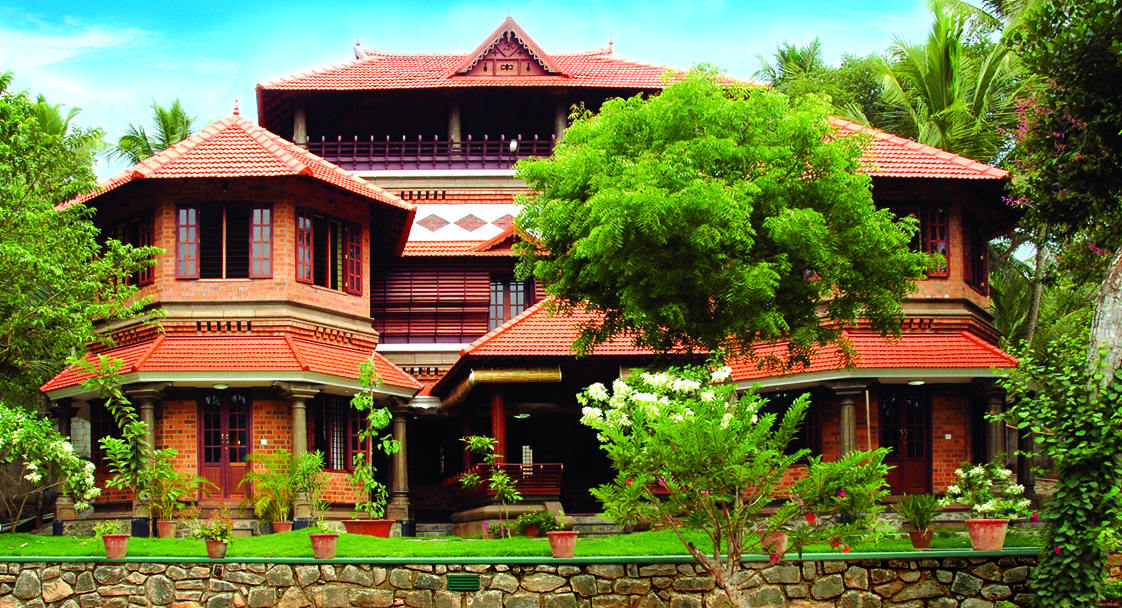
At Amrutham, our small eight-room sanctuary near Vellayani Lake in Kovalam, Kerala, that patience is the whole point. Here, oleation is not a box to tick before the "real" therapy begins — it is the therapy beginning. As always, Snehana and the cleanse that follows are traditionally used to support the body's own renewal, not to cure; if you live with a medical condition, we'll work alongside your doctor, not around them. If you feel ready for a deeper, supervised reset — one that begins, as it should, with care — we would be glad to welcome you.


