
There is a moment in a classical cleanse when the body finally lets go — and more often than not, it begins with warmth. Swedana, the herbal steam therapy (sudation) that follows oil treatment in Ayurvedic preparation, is that quiet turning point: a gentle, enveloping heat that coaxes the body to soften, open, and release. Long before the deep cleansing of Panchakarma begins, Swedana does the patient, unglamorous work of getting you ready.
If you have ever sighed as warm steam loosened tight shoulders, you already know a little of what this feels like. Here, that everyday relief is shaped into something deliberate, herbal, and deeply restorative — a step that prepares you, body and breath, for the days ahead.
What Swedana actually is
In Ayurveda, Swedana means "sweating therapy" — the deliberate, therapeutic use of heat and herbal vapour to warm the body and induce a light, cleansing perspiration. It is one of the two great preparatory steps in a classical cleanse, paired with oleation (Snehana), the oil treatment that comes first. Together they form Purvakarma — the preparation phase that readies you for the main cleansing actions of Panchakarma.
The principle is beautifully simple. Heat, in the language of Ayurveda, is the opposite of the cold, dense, sticky quality of accumulated toxins (ama). When warmth meets the body, channels widen, tissues soften, and what was once stuck begins to flow. Steam therapy of this kind has been used across many healing traditions; you can read a general overview of the steam bath and its long history as a method of warming and cleansing the body. What sets Swedana apart is the herbal medicine carried in the vapour and its precise place within a structured cleanse.
Why Swedana therapy comes before the cleanse
It is tempting to think of cleansing as the dramatic part and preparation as the warm-up. In Ayurveda, the order is everything — and skipping the preparation can make a cleanse harsher and less effective. There is a logic to the sequence:
- First, oleation (Snehana): medicated oils, taken internally and applied through oil massage (Abhyanga), work into the tissues and begin to loosen toxins (ama) from where they have settled.
- Then, Swedana: warmth and herbal steam open the body's subtle channels (srotas), turning those loosened toxins liquid and mobile so they can travel toward the digestive tract.
- Only then, the cleanse: with toxins softened and moving, the main cleansing actions of Panchakarma can carry them out gently, rather than forcing a body that was never prepared.
Think of it as preparing the ground before the harvest. Oleation loosens; Swedana liquefies and mobilises; the cleanse clears. Each step makes the next one kinder. This is why a thoughtful Panchakarma-rooted detox programme rarely begins with the cleanse itself — it begins with warmth.
How warmth opens the channels (srotas)
Ayurveda imagines the body as a network of fine channels (srotas) through which everything moves — nourishment, fluids, waste, even thought. When these channels are clogged with toxins (ama), the body feels heavy, dull, and sluggish; digestion falters and the mind clouds. Warmth is the traditional remedy for this stagnation.
As herbal steam reaches the skin, the surface vessels widen and the pores open. Heat penetrates inward, and the cold, sticky quality of ama begins to melt. Loosened by the earlier oil treatment and now mobilised by warmth, toxins are carried from the deeper tissues back toward the gastro-intestinal tract — the body's main exit route. A light sweat is both a sign and a small act of release. The result is often felt at once: a body that is lighter, looser, and easier to move; a breath that comes more freely.
What a Swedana session feels like
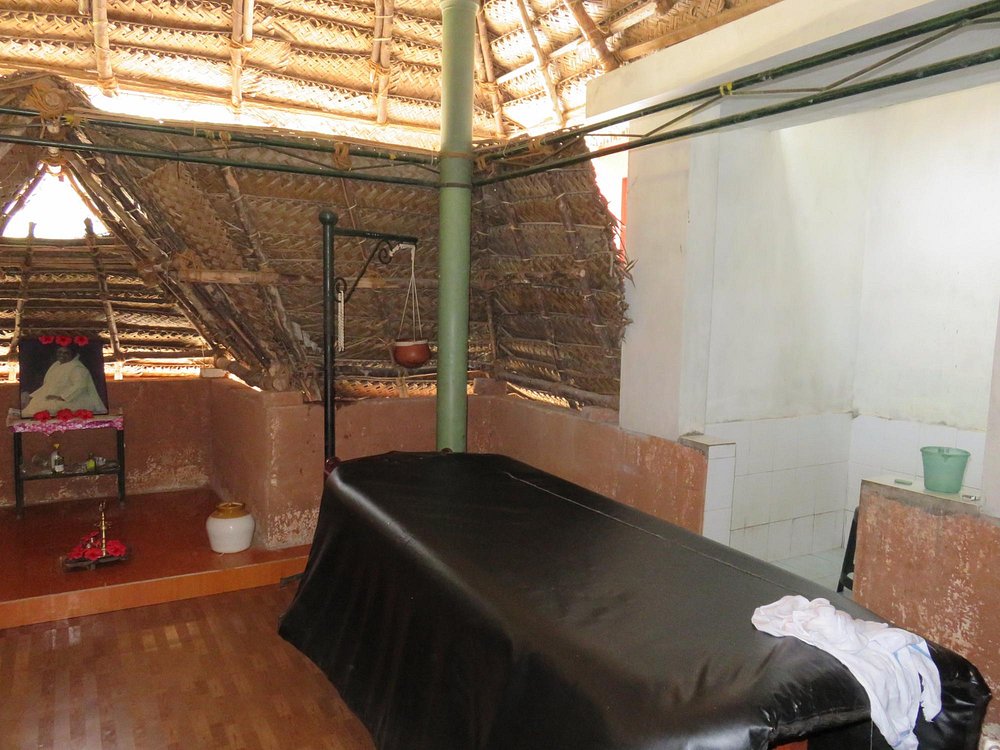
For many guests, this is the most quietly comforting therapy of the whole preparation. A common form is the herbal steam box (sometimes called Bashpa Sweda): you sit or recline in a wooden cabinet while gentle, medicated vapour — steam infused with warming herbs — rises around you, with your head left outside in the cool air. The face stays free, the breath stays easy, and the heat never overwhelms.
A session usually unfolds like this:
- It often follows oil massage: Swedana is frequently given just after Abhyanga, so the oils already worked into the skin are warmed and carried deeper.
- The warmth builds gently: heat is raised slowly and watched closely by the therapist; you are never left alone, and the temperature is matched to your comfort.
- A light sweat appears: the aim is a soft, even perspiration — enough to signal that the channels have opened, never a punishing heat.
- It ends with rest: afterward you rest, rehydrate with warm water, and let the body settle. Many describe a deep, almost weightless calm — clearer, softer, and more grounded.
There are gentler localised forms too — warm herbal poultice bundles (Pinda Sweda) pressed over stiff joints, or steam directed to a particular area — chosen by your practitioner to suit your body on the day.
Who Swedana suits — and who should take care
Because it is warming and mobilising, Swedana is traditionally valued for bodies that feel cold, stiff, heavy, or congested. It is most often appreciated by those carrying:
- Stiffness and tension: tight muscles, aching joints, and a body that feels locked up after travel or long sitting.
- Heaviness and sluggishness: the dull, congested feeling that Ayurveda associates with accumulated toxins (ama) and weak digestive fire (agni).
- A restless, overworked mind: warmth and stillness can settle the nervous system as much as the body.
Swedana is not for everyone, and that is exactly why it is never given casually. Heat-based therapy is generally avoided or carefully modified during pregnancy, in certain heart conditions, with very high blood pressure, during fever or acute inflammation, and for bodies that already run hot or depleted. This is health-adjacent care, not a spa add-on: it can help relieve heaviness and stiffness and support a gentle cleanse, but it does not cure disease, and it should always be guided by a qualified Ayurvedic practitioner. At Amrutham, no therapy begins until our doctors have understood your constitution (Prakriti) and your present state — so the warmth that meets you is the warmth that is right for you.
Swedana at Amrutham — warmth with intention
At Amrutham, an intimate eight-room sanctuary in Kovalam, Kerala, near the calm of Vellayani Lake, Swedana is never a stand-alone treatment to be ticked off a menu. It lives inside a considered sequence — assessment, oil treatment, herbal steam, and only then the cleanse — shaped to you by qualified practitioners. The unhurried pace, the sattvic (vegetarian) food, and the quiet of the surroundings let the therapy do what warmth does best: soften, open, and release.
It is part of the larger M·A·Y rhythm — Meditation · Ayurveda · Yoga — and, like all of it, an invitation to take a U-turn inward. If a true preparatory cleanse calls to you, our Panchakarma-rooted detox retreat places Swedana exactly where it belongs — early, gentle, and essential — while our wider classical Ayurveda programme and the 21-day Panchakarma certification course go deeper still for those who wish to learn the tradition from within.
Come for the warmth. Stay for the quiet sense of lightness that follows — clearer, calmer, and more at home in your own body.


