
There is a particular kind of touch that carries the weight of centuries — firm yet unhurried, knowing exactly where the body holds its tension. If you have ever wondered what lies beneath that touch, exploring the kalari uzhichal course content is a way of understanding not just a technique, but a tradition that has quietly shaped Kerala's healing arts for generations.
For those drawn to learn rather than simply receive, training in this ancient bodywork is an invitation to slow down, to listen with your hands, and to step into a lineage older than memory. Here in Kovalam, near the still waters of Vellayani Lake, we offer that path to anyone willing to approach it with patience and respect.
What is Kalari Uzhichal?
Kalari Uzhichal is the traditional therapeutic massage born from Kalaripayattu — the martial art of Kerala, often described as one of the oldest fighting systems in the world. Warriors trained their bodies to extraordinary suppleness, and the same hands that taught combat also healed it. The massage developed as a way to keep fighters limber, to recover from injury, and to maintain the body as a finely tuned instrument.
Rooted in the same principles as Ayurveda, Kalari Uzhichal works with medicated oils, rhythmic strokes, and an intimate map of the body's vital points (marma). It is traditionally used to improve flexibility, ease stiffness, and support the free movement of energy through the body. You can read more about the broader martial tradition it springs from in this overview of Kalaripayattu on Wikipedia.
Inside the kalari uzhichal course content
A genuine training is far more than learning a sequence of strokes. The kalari uzhichal course content moves steadily from foundation to application, so that by the end you understand not only how to perform the massage but why each movement matters. While the depth of any programme depends on its duration and the readiness of the student, a thoughtful curriculum typically weaves together several strands.
- Philosophy and origins: the connection between Kalaripayattu, Ayurveda, and the body's vital points (marma), so technique rests on understanding.
- Anatomy and the marma map: learning where the body's sensitive junctions lie, and the care these points demand.
- Oils and preparation: choosing and warming medicated oils, and preparing both space and student for the session.
- Foot-pressure and hand technique: the signature strokes — including the practitioner working with the feet while holding a suspended rope for balance.
- Sequencing and rhythm: how a full-body treatment unfolds, and the pacing that lets the body soften rather than brace.
- Practice and supervision: guided hands-on sessions where corrections are gentle and consistent.
If you are weighing different healing trainings, it can help to explore the full range of our courses alongside this one, so you can choose the path that genuinely suits your hands and your intentions.
The foot-pressure method in the kalari uzhichal course content
What surprises many newcomers to the kalari uzhichal course content is the distinctive foot-pressure method. In its deepest form, the practitioner uses their feet rather than their hands, gliding along the recipient's body while steadying themselves with an overhead rope or beam. This allows for long, sweeping strokes and a controlled depth of pressure that hands alone cannot sustain.
It looks simple from the outside. It is anything but. Learning to balance, to modulate weight, and to read the body through the soles of your feet asks for considerable practice and a calm, attentive presence. This is why the training rewards patience over haste — and why it sits so naturally within a contemplative setting rather than a rushed classroom.
Much of the early learning happens slowly, almost wordlessly — feeling how a stroke lands, noticing where the body resists and where it yields. A good teacher will let you make small mistakes, correct them with a quiet word, and ask you to repeat the movement until it becomes less a thing you do and more a thing you sense. In this way the kalari uzhichal course content is as much an education of attention as of technique.
Who the certification is for
You do not need to be a seasoned therapist to begin, though some who arrive already carry experience in massage, yoga, or movement work. What matters more is sincerity and a willingness to learn slowly. This training tends to suit:
- Bodyworkers and therapists wishing to add an authentic Kerala technique to their practice.
- Yoga teachers and movement practitioners drawn to the body's structure and energy lines.
- Wellness travellers seeking a deeper, more skilful engagement with Ayurveda than a single treatment can offer.
- Lifelong learners who simply feel called to a living tradition and wish to carry it forward responsibly.
Those who fall in love with Kerala's bodywork often go on to broaden their study. Many pair this with the foundational skills of the Massage Course, or look toward the more comprehensive Panchakarma certification for a fuller grounding in classical Ayurvedic detoxification and care.
Benefits the tradition speaks to
It would be dishonest to make promises of recovery. What we can share is what the tradition — and the experience of those who practise it — speaks to. Kalari Uzhichal is traditionally used to:
- Improve flexibility and ease in the joints and muscles.
- Relieve stiffness and the everyday tension carried in the back, shoulders, and limbs.
- Support circulation and a sense of lightness through the body.
- Encourage a calmer, more settled mind through deliberate, rhythmic touch.
Because the technique engages the body's vital points, it shares much with the more focused work of Marma therapy, which many students find illuminating to experience alongside their training. As always, anyone with an existing health condition should consult a qualified practitioner before beginning bodywork of any kind.
Learning in the right setting
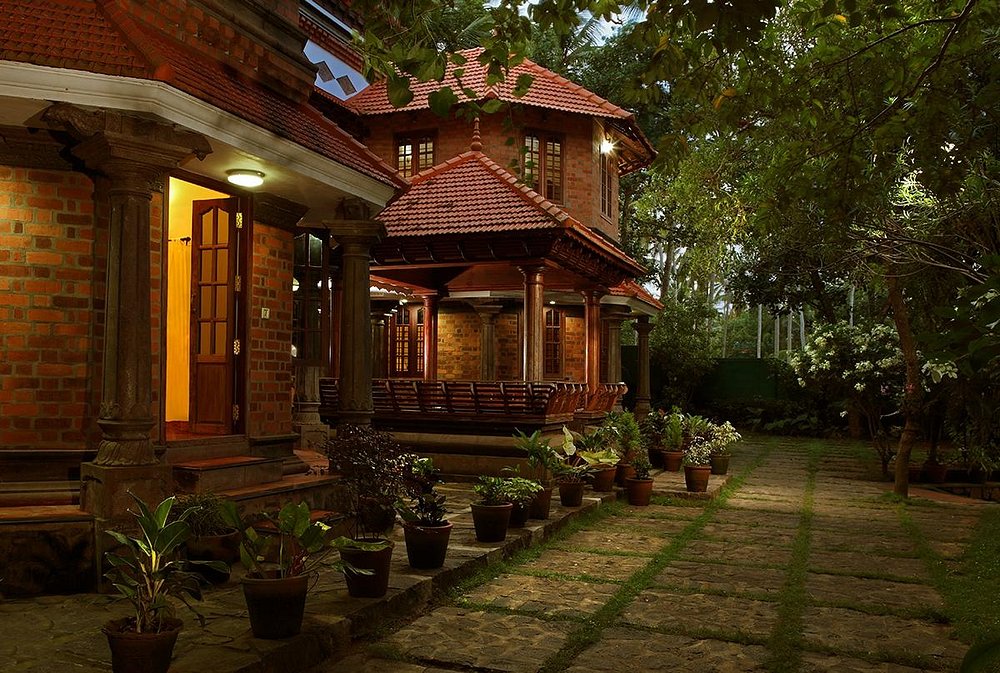
A tradition like this is best absorbed somewhere quiet — where the days unfold gently, the food is sattvic (pure and vegetarian), and there is space to reflect on what your hands are learning. With only eight rooms, our resort is intimate by design, the kind of place where study feels less like a course and more like a return to yourself, an unhurried U-turn inward.
If your heart is set on learning this living art with care and authenticity, we would be glad to welcome you. Come with curiosity and patience, and let the tradition meet you where you are.
Continue Exploring
- Kalari Uzhichal for Injury Recovery: Learning Kerala's Healing Touch
- Kalari Uzhichal: Learning Kerala’s Warrior Bodywork
- Learn Kalari Uzhichal in Kerala: A Warrior's Healing Art
- Learn Panchakarma in Kerala: Tradition, Discipline and Daily Practice
- Learning to Sequence a Yoga Class: A Teacher's First Craft


