
Close your eyes and imagine a thin, warm thread of oil falling onto the centre of your forehead — slow, steady, unbroken — moving in a gentle arc as it pours. This is Shirodhara, and there is nothing to do but receive it. Within minutes, the chatter that usually fills your head begins to thin, as though someone has turned the volume of your thoughts down by a few notches.
This is Shirodhara — one of Ayurveda’s most quietly remarkable therapies, and one of the few that can leave a restless mind feeling unburdened almost in spite of itself. For travellers arriving with months of overwork, broken sleep, and a nervous system that never quite switches off, it feels less like a treatment than like permission to finally stop.
What Shirodhara Actually Is
The name says it plainly. In Sanskrit, shiro means head and dhara means flow or stream — so Shirodhara is, simply, a continuous flow over the head. A vessel suspended above the brow releases a fine, even stream of warm liquid that lands on the forehead, traditionally over the “third eye” point between the eyebrows, and is allowed to run back through the hair and scalp.
Most often the liquid is a warm medicated oil (Taila), chosen and sometimes infused with herbs to suit you. Depending on what a practitioner is working toward, the stream may instead be medicated buttermilk (Takradhara) or a herbal decoction. The oils are not incidental — in Ayurveda, warm oil is itself deeply calming to the body’s movement-and-nervous-system principle (Vata dosha), so often the one stirred up by modern life.
It rarely stands alone. Shirodhara is usually offered as the culmination of a session that begins with an oil massage (Abhyanga), so the body is already warm, open, and unwound before the stream begins — part of why it reaches as deep as it does.
What It Feels Like to Receive
If you have never experienced it, the prospect of oil poured onto your forehead can sound strange — even ticklish. In practice it is the opposite: warm, rhythmic, and oddly hypnotic, and the body tends to surrender faster than the thinking mind expects. Here is roughly how a session unfolds:
- You lie back, fully supported: you rest face-up on a wooden treatment table, a small bolster under the neck, eyes covered or gently closed against the oil.
- The stream begins: warm oil starts to flow onto the forehead, and the vessel is moved in a slow, sweeping rhythm so the point of contact shifts gently rather than fixing in one spot.
- The mind quietens: many people describe a floating, half-asleep state — awake, but with the usual mental traffic stilled. Some drift off entirely.
- It lasts a while: a session commonly runs somewhere between thirty and forty-five minutes, often as part of a course of several days rather than a one-off.
- You return slowly: afterwards, the oil is left to soak in for a time before a warm bath. The hours that follow are best kept soft and unhurried.
It is worth giving the rest of that day to quietness. Shirodhara tends to leave people heavy-limbed and dreamy — clearer, calmer, and more inward — which is one reason it sits so naturally within an unhurried retreat, where there is simply nowhere you need to rush off to.
Why a Stream of Oil Calms the Mind
You do not need to believe anything for Shirodhara to feel profound — but it helps to understand why such a simple act reaches so deep. Several threads, old and new, seem to meet on that small patch of forehead.
In the Ayurvedic view, anxiety, racing thoughts, and disturbed sleep are largely a matter of aggravated Vata — the subtle principle governing movement and the nervous system. Warm oil, applied steadily, is one of its classic antidotes: it grounds, lubricates, and settles. The forehead and scalp also hold vital energy points (Marma), which the gentle, continuous pressure of the falling stream is thought to soothe.
There is a plainer explanation too, and the two sit comfortably together. A warm, predictable, rhythmic sensation, sustained for many minutes with nothing else demanded of you, is exactly the kind of input that coaxes an overstimulated nervous system out of its braced, alert state and toward rest. The monotony is the medicine — and in a life of notifications and split attention, an experience that asks for nothing but stillness is itself rare.
What Shirodhara Is Traditionally Used For
Classically, Shirodhara is reached for when the trouble lives, as it were, above the neck — in the mind, the sleep, the senses. It is most often offered as part of a broader plan, not as a stand-alone fix, and Ayurveda would frame its benefits as support rather than cure. Among the states it has traditionally been used to ease:
- A restless, overactive mind: the mental churn of stress, worry, and the feeling of never being able to power down.
- Difficult sleep: it is perhaps best loved for its effect on insomnia and shallow, broken sleep, leaving many people sleeping more deeply for nights afterward.
- Mental fatigue and overwhelm: the foggy, frayed exhaustion of carrying too much for too long.
- Tension held in the head: certain headaches and the tightness that gathers in the brow and scalp.
A responsible word here matters. Shirodhara is a welcome support for stress, sleep, and a tired mind, but it is not a treatment for any diagnosed psychological or neurological condition, and it does not replace medical or mental-health care. If you live with depression, anxiety, a sleep disorder, or any ongoing condition, see it as something that may sit alongside proper treatment — and tell both your doctor and your practitioner what you are managing.
For exactly this reason, Shirodhara is rarely offered in isolation at Amrutham. It is woven into our stress-relief therapies, combined with massage, breathwork, diet, and rest into a programme aimed at the whole nervous system rather than a single afternoon’s calm. For those whose wish is simply to slow down and unwind, our relaxation therapies follow the same gentle logic.
A Few Honest Cautions
Gentle does not mean indiscriminate, and a good practitioner will always begin with questions before oil. Shirodhara is generally avoided or carefully adapted in pregnancy, with a fever or acute illness, with certain scalp or skin conditions, and in other situations a trained eye will recognise. The oils, their temperature, and even whether Shirodhara suits you at all are decisions that depend on your constitution (Prakriti) and current state — never on a template.
This is why an authentic session is preceded by an unhurried consultation. One of our qualified Ayurvedic practitioners will read your pulse, ask about your history, sleep, and stresses, and choose the oils and approach for you — adjusting as the days unfold. It is also the moment to mention any medication, medical condition, or pregnancy, so the therapy can be modified or set aside. Set within a wider plan such as our classical Ayurveda programme, Shirodhara becomes part of something cumulative rather than an isolated treat.
Stillness, Poured Slowly
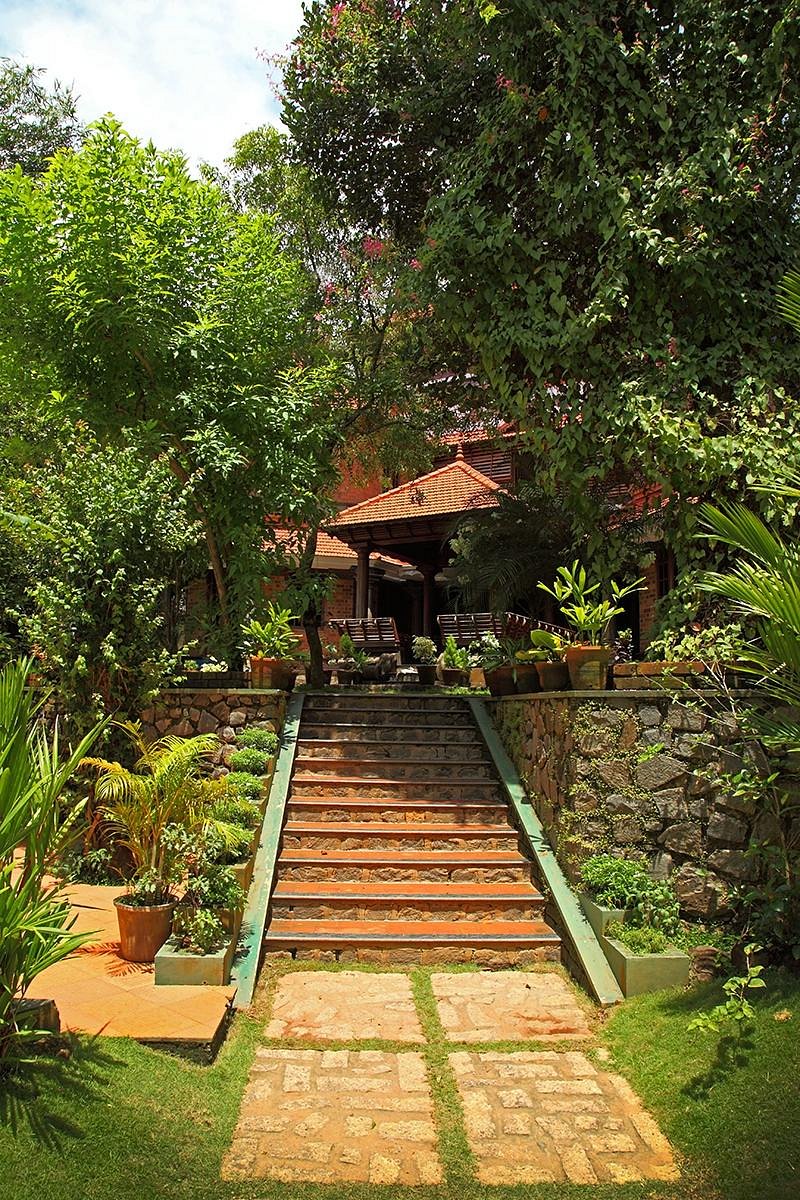
What lingers about Shirodhara is rarely the oil itself. It is the memory of a mind that, for once, had nothing to chase — proof that beneath the noise, a quieter version of you has been waiting all along. That small U-turn inward is the whole intention of our eight-room sanctuary near Vellayani Lake: not a dramatic intervention, but a steadier, clearer, and more grounded way of being that you can carry home.
If your mind has been running too fast for too long, this gentle, time-honoured stream may be exactly the kind of pause it has forgotten how to take. When you are ready to feel it, our team will help you shape a stay around what your nervous system most needs.


