
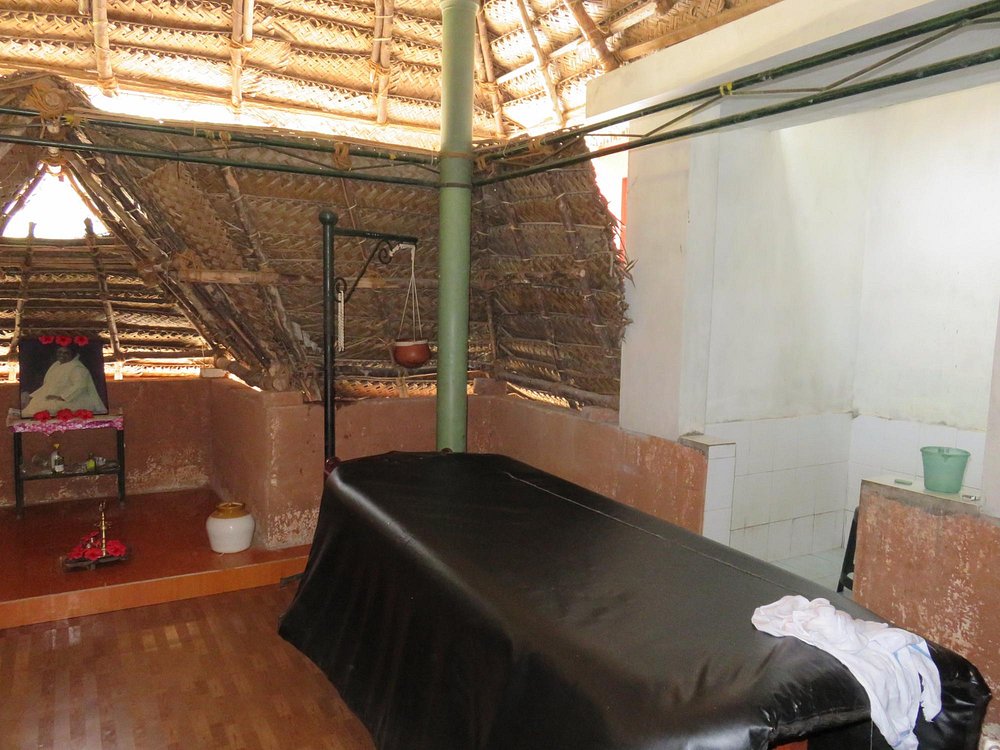
There are places on the body that seem to hold more than flesh. The hollow at the base of the throat. The soft centre of the palm. The point between the brows where worry gathers and, sometimes, quietly lets go. Long before anatomy had names for nerves and arteries, the physicians of Kerala had already mapped these tender crossings — and from that map grew marma therapy, the art of touching them with enough skill to reach something deeper than muscle.
These are the marma points — and working with them is among the most subtle, and most quietly powerful, practices in all of Ayurveda. If you have ever felt a single, knowing touch loosen a tension you could not name, you already have a sense of what this tradition has tended for centuries. Here, gently, is what this healing practice is, what a session involves, and why it has long belonged to the soil of Kerala.
What Are Marma Points?
A marma (literally a "hidden" or "vital" point) is a junction — a place where flesh, vessels, ligaments, bone, and joint meet, and where the life-force (prana) is understood to be especially concentrated. The classical texts describe 107 such points across the body, with the mind often counted as the subtle 108th. They sit at the wrists and ankles, along the spine, at the temples and the crown, in the palms and the soles — the very places we instinctively press when we are tired or sore. They are described in the wider literature on marma points as junctions of the body's vital anatomy.
Think of them less as anatomical landmarks and more as switches in the body's energetic wiring. In Ayurvedic understanding, prana flows through subtle channels (nadis), and the marmas are where that flow can pool, stall, or run freely. When a point is held in tension — by injury, by posture, by stress carried for years — the current around it grows sluggish. Skilled, attentive touch at that junction is thought to ease the blockage and let energy move as it was meant to: a small adjustment with a wide reach.
What a Marma Therapy Session Involves
A marma session is unhurried and deeply quiet. It begins, as honest Ayurvedic care always does, with a conversation — a practitioner reading your pulse, asking about your sleep, your tensions, your history, and your constitution (Prakriti) — so the work is shaped to you rather than to a template. Only then do hands meet skin.
The touch itself is gentler than most people expect. This is not deep-tissue kneading or forceful pressure; it is precise, listening contact at specific points. What a session may include:
- Warm medicated oil: most sessions begin with oil chosen for your constitution, applied along the limbs and torso to soften the tissue and calm the nervous system.
- Stimulation of the points: the practitioner works individual marmas with the fingertips — gentle, sustained pressure or slow circular movement, held and released with intention.
- Breath and stillness: you are often invited to breathe slowly and simply notice, letting the body settle rather than perform.
- A gradual close: the session ends quietly, with time to rest, so the effects can continue to unfold rather than being rushed away.
Many people find the experience meditative — a slow, deliberate U-turn inward, where attention sinks below the surface of thought and the body remembers how to soften. It is common to leave a little drowsy, a little lighter, and noticeably less braced than when you arrived. Our dedicated Marma Treatment sets aside the time and stillness this kind of work asks for, with a qualified practitioner guiding each session.
What Marma Therapy Is Traditionally Used For
In the classical tradition, marma work is valued for the way it frees stuck energy and eases the body out of holding patterns it has forgotten it is in. It is not a cure-all, and an honest practitioner will never present it as one — but it has long been turned to for a familiar cluster of complaints:
- Releasing tension: the held tightness of shoulders, jaw, and brow that accumulates quietly under stress.
- Encouraging energy flow: a sense of being unblocked and lighter, as if something stagnant has begun to move again.
- Relieving pain: it is traditionally used to ease aches around stiff joints, a tense back, and a tired, knotted neck.
- Calming the mind: many find the deep relaxation it brings settles a restless nervous system and steadies sleep.
Where pain centres on the back and neck in particular, marma work is often woven into a broader, more targeted programme. Our Spine & Neck Care combines point work with other classical therapies to address stiffness and strain along the spine — an approach worth discussing with a practitioner if that is where your discomfort lives.
As with all of Ayurveda, the language here is gentle for a reason: these therapies may support and can help relieve, but they do not replace medical care. If you live with a diagnosed condition, are pregnant, or are recovering from injury or surgery, mention it at your consultation — certain points are modified or left alone accordingly, and this work is best taken alongside, not instead of, the guidance of your own doctor.
Roots in Kerala's Living Tradition
Marma knowledge is woven into the very fabric of Kerala — and, fascinatingly, it grew up not only in the healer's room but on the training ground. Kalaripayattu, the ancient martial art of this coast, demanded an intimate understanding of the vital points: a warrior learned where a strike could disable, and, just as importantly, how the same points could be pressed and treated to heal. From that twin knowledge — to wound and to mend — grew a sophisticated tradition of bodywork that physicians and martial masters here have carried, hand to hand, across generations.
That lineage is part of why Kerala remains so deeply associated with authentic Ayurveda, and why this art still feels so at home along its shores. Practised here, marma therapy is not a novelty borrowed from elsewhere; it is a local inheritance, kept alive by practitioners who learned it the old way. At our small resort near Vellayani Lake — a quiet stretch of that same coast, about thirty minutes from Trivandrum — we hold to that unhurried, place-rooted spirit rather than to anything packaged or rushed.
Where Marma Work Fits in a Stay
A single marma session can be a beautiful thing — a pause, a release, a quiet reset. But the tradition tends to reveal more of itself over a few unhurried days, when the body has time to soften, the mind to slow, and the effects of one session to settle before the next begins. This is the rhythm of M·A·Y — Meditation, Ayurveda, and Yoga — held within the A.C.E. framework of Awareness, Contentment, and Equanimity that shapes everything we offer.
Within a fuller programme, point work sits naturally alongside oil massage, sattvic (vegetarian) meals prepared to settle the system, daily yoga, and rest. If you would like this work held inside a broader, practitioner-guided arc of treatments, our Ayurveda Package is built for exactly that — a complete stay in which each therapy supports the next, and there is genuinely nowhere to rush to.
However you come to it, marma therapy is, at heart, an invitation — to be touched with attention, to let go of what you have been holding, and to feel the quiet current of your own body begin to move more freely. When you are ready to experience it, we would be glad to welcome you.


