
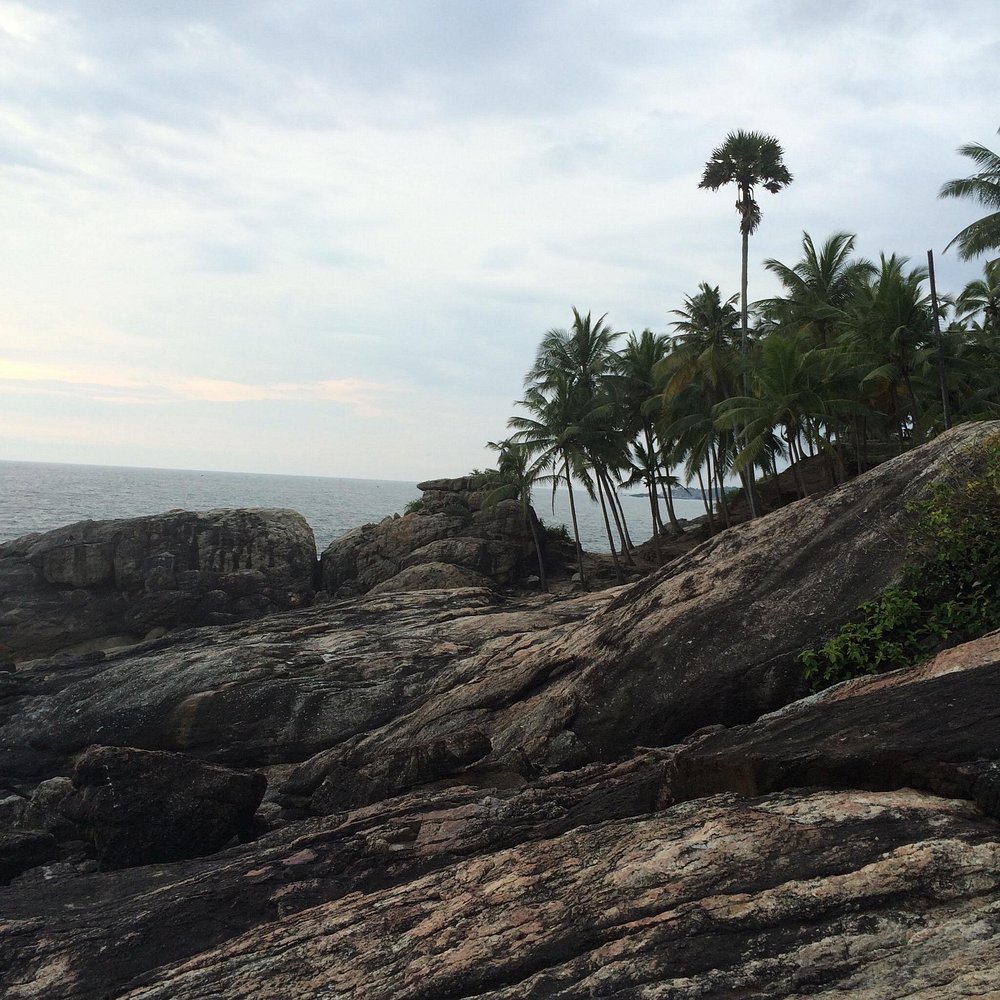
In Kerala, the rains do not merely arrive — they are awaited. As the fierce summer breaks and the first grey clouds gather over the coconut palms, an old quiet settles across the land. This is Karkidakam, the final month of the Malayalam calendar, falling across late July and August, when the monsoon wraps the coast in soft, ceaseless water and the whole world turns inward. It is also the season at the heart of monsoon Ayurveda — the old conviction that these very rains make the most healing time of the whole year.
To the unhurried eye it can look like a season to wait out — too wet to travel, too grey to do much. Yet for centuries, Kerala’s households and its Ayurvedic tradition have read these rains differently. Karkidakam is not the season to endure; it is the season to heal — in the old reckoning, the best time of the whole year to give the body back to itself.
What Karkidakam is — and why Kerala calls it the healing month
Karkidakam is the twelfth and last month of the Malayalam year, named for the zodiac sign of the crab (Karka), and coincides with the heart of the south-west monsoon. Historically it was also a lean month — the granaries low before the harvest, the fields too flooded to work, the sea too rough for fishing. Families turned away from the outer world and toward the inner one: reading the Ramayana aloud by lamplight, eating simply, and tending to their health.
Out of that necessity grew a culture of wellness. With nothing to harvest and nowhere to rush, Karkidakam became the natural window for rest, restorative food, and the seasonal therapies known across the region as Karkidaka Chikitsa — monsoon treatment. What began as making the most of a fallow month matured into a science of timing: the right care, given when the body is most ready to receive it.
Why the body responds so well to the rains
The tradition’s instinct that the monsoon suits therapy rests on something quite physical. Ayurveda watches the seasons closely, a practice it calls seasonal regimen (Ritucharya) — living and treating in step with the year rather than against it. By this reading, the rains create the conditions that make monsoon Ayurveda so well suited to deep work:
- Cool, humid air opens the body: after summer’s harsh dryness, the moisture-laden monsoon air is thought to soften and open the pores and the body’s subtle channels (srotas), so that medicated oils and therapies are more readily absorbed.
- The skin is supple, not parched: relieved of summer’s heat, the skin holds oil better — which matters greatly for a tradition built on warm oil massage (Abhyanga) and oleation (Snehana).
- A calmer external world lowers the inner noise: the grey, rain-stilled days quiet the senses and the mind, and a settled mind is part of how the body heals.
- The seasonal shift is read as a time of imbalance to be steadied: the rains are traditionally associated with a rise in the movement-and-nervous humour (Vata) and a disturbance of the digestive fire (agni), which makes it a fitting moment to rebalance rather than simply to wait.
None of this is a promise, and Ayurveda is careful to say so. These are conditions that may support therapy and the body’s own repair, observed over a long lineage — not a guarantee of any outcome. The honest claim is gentler, and more trustworthy for it: the rains make a hospitable season for care, and the tradition has learnt to use it well.
The shape of a monsoon Ayurveda programme
Karkidaka Chikitsa is less a single treatment than a season of care, usually unfolding in two movements. The first is a clearing — a measured cleansing that lightens the body. The second is a rebuilding — a slow, nourishing rejuvenation (Rasayana) that restores strength and steadiness. The aim is not to drain you but to return you, lighter and quieter, to the year ahead.
Within that arc, a monsoon programme is woven from classical therapies, each chosen for the body by the practitioner rather than ordered from a menu:
- Warm oil massage (Abhyanga): long, rhythmic strokes with medicated oils, the cornerstone of monsoon care, traditionally used to calm the nervous system and ease stiffness.
- The still pour (Shirodhara): a fine, continuous stream of warm oil across the forehead that quiets a racing mind, suited to the season’s contemplative mood.
- Herbal poultice (Pinda Sweda): warm boluses of medicated leaves or rice pressed over the body, often used to relieve aching joints and tired muscles.
- Restorative diet and herbs: a warm, simple, vegetarian (sattvic) table built to relight the digestive fire — including, in many Kerala homes, the medicinal gruel Karkidaka Kanji, a porridge of rice and warming herbs eaten through the month.
For deeper or more structured cleansing, the same season lends itself to a guided monsoon detox at Amrutham — a more thorough clearing, undertaken with the same patient, practitioner-led care. Which path suits you is precisely the kind of judgement that belongs to a qualified practitioner, never to a brochure.
The culture of monsoon Ayurveda
What gives Karkidakam its grace is that the healing is not separate from the season — it is of it. The rejuvenation Ayurveda prescribes only deepens what the rains begin: a turning down of speed, a turning in of attention. There is something quietly profound in healing at the same hour the land itself is replenishing.
Stay through a Kerala monsoon and you feel why the old families chose this month. The day softens. Rain on a tiled roof becomes its own kind of meditation. Meals turn warm, the body sinks gratefully into rest, and the outward pull of ordinary life loosens its grip. The season does much of the work a retreat usually has to coax out of you — it makes the inward turn feel natural rather than forced.
This is the spirit that shapes a stay with us. Our approach — M·A·Y, Meditation, Ayurveda, and Yoga — and the A.C.E. framework of Awareness, Contentment, and Equanimity are names for what the rains invite on their own: a return to yourself, what we call a U-turn inward. Set in a quiet corner of Kovalam near Vellayani Lake, with only eight rooms, the resort is small and deliberately uncommercial — a place built to be lived slowly, never more so than when it rains.
Coming for Karkidakam: a few honest expectations
If the season is calling to you, a little realism helps it land well. Hold these lightly:
- Give it room: meaningful rejuvenation is measured in weeks rather than days, because the clearing and the rebuilding cannot be hurried. A longer, quieter visit gives the season more to work with.
- Begin with a consultation: a qualified practitioner reads your constitution (Prakriti) and your goals before anything begins — your therapies are chosen for you, never standardised. This is for your safety, and non-negotiable.
- Come for the rhythm, not a result: the felt change tends to arrive sideways — in deeper sleep, a steadier appetite, a calmer mind — more than as a single dramatic moment. And the wettest, greyest days are often the most restorative of all.
Kerala has known for centuries what the modern calendar forgets: that there is a right time to rest, and the body knows it even when the diary does not. Karkidakam is that time made visible — a whole month the tradition sets aside for healing, given freely by the rains. A monsoon Ayurveda programme rooted in your own constitution is not a cure to be claimed or a box to be ticked; it is a chance, in the most hospitable season, to soften, to be cared for, and to return to yourself. When you are ready to plan the practical side — dates, rooms, the length of stay the season deserves — you are warmly welcome to book your stay. The rains are already falling; you need only come to meet them.


