
Before the therapies, before the early mornings and the slow meals, there is a smaller decision that quietly shapes everything: where to set your bag down. For a wellness journey to the south coast, the choice often comes down to Kovalam vs Varkala — two very different stretches of Kerala shore — with the harbour city of Kochi a little further north. The base you choose will colour the whole rhythm of your trip: the sounds you wake to, the distance to the sea, the kind of evening that waits when the treatment room goes quiet.
Three names come up again and again for travellers researching this coast: Kochi, Varkala, and Kovalam. Each has a genuine character, and none is wrong — they simply suit different intentions. This is an honest comparison of the three, written not to talk you out of anywhere, but to help you match the place to the kind of trip you are actually hoping for.
Kochi: the cultural gateway, full of life
Kochi (Cochin) is the cosmopolitan heart of Kerala — a working harbour city with centuries of trade written into its streets. Fort Kochi and Mattancherry hold Portuguese churches, a centuries-old synagogue, spice warehouses, and the famous Chinese fishing nets along the waterfront. There are galleries, cafés, and during its art biennale a genuine international buzz. If part of you wants culture, history, and good food woven around your wellness time, Kochi delivers it generously.
It is worth being clear-eyed about what that energy means for a retreat, though:
- Best for: travellers combining sightseeing, heritage, and city comforts with a few wellness days; those flying via a major hub and wanting to ease in.
- The pace: lively and urban — traffic, crowds, and the steady hum of a port city. Stimulating by day, rarely silent by night.
- The sea: a harbour and backwater setting rather than a swimming beach; the water here is for boats and sunsets more than for bathing.
- Worth knowing: it sits toward central Kerala, a fair drive or a domestic hop from the deep south.
For a culture-forward holiday with wellness threaded through it, Kochi is a fine choice. For a deep inward reset, its very vitality can become the thing you find yourself travelling away from — which is where the Kovalam vs Varkala question really begins.
Varkala: cliffs, bohemia, and beach-town energy
Varkala is the most dramatic of the three to look at — a long red-laterite cliff rising straight above the Arabian Sea, with a footpath of cafés, yoga shalas, and shops strung along its edge. It has a young, bohemian, traveller-friendly spirit: sunset crowds, live music, open-air drop-in yoga classes, and the easy sociability of a beach town that knows it is beautiful. Papanasam beach below is also a place of pilgrimage, which gives Varkala an unusual blend of the sacred and the carefree.
If you want movement, company, and the freedom to wander between classes and cafés, Varkala has real charm. As a base for a serious, practitioner-led wellness programme, the trade-offs look like this:
- Best for: independent travellers, drop-in yoga and surf, social evenings, and a flexible, mix-and-match kind of trip.
- The pace: relaxed but social and seasonal — the cliff path is busy and buzzy in high season, quieter and patchier off it.
- The wellness style: plentiful but largely casual and à la carte — wonderful for a class here and a treatment there, less suited to a structured, supervised Ayurvedic arc.
- Worth knowing: it lies in the south, roughly an hour up the coast from Trivandrum, and shares that beach-town rhythm of a place built partly around its visitors.
Varkala rewards the traveller who wants to keep moving. The very buzz that makes it fun, however, is the opposite of the stillness a contemplative retreat is built around — and in the Kovalam vs Varkala comparison, that distinction is the real heart of the matter.
Kovalam: the quiet south, made for turning inward
Kovalam, at the southern tip of the coast, is the name most associated with Kerala's beaches — and its famous crescent shore does draw crowds. But step a little inland from the busy sands, toward the calm of Vellayani Lake, and the character changes entirely. Here the south softens into something slower: palm-shaded lanes, freshwater stillness, birdsong, and a quiet that the louder stretches of coast simply do not hold. This is the Kovalam we mean — not the beach strip, but the green, contemplative hinterland behind it. You can see how Kerala Tourism frames both shores on its official Kerala Tourism pages.
It is this quieter face of the south that suits a genuine inward journey:
- Best for: a focused Ayurveda, yoga, or meditation retreat; rest, recovery, and a deliberate slowing-down rather than sightseeing.
- The pace: unhurried and nature-immersed — the kind of calm that lets therapies actually settle and the nervous system unwind.
- The setting: near tranquil Vellayani Lake, away from the commercial bustle, with the sea close enough to visit but never roaring at your door.
- The access: about thirty minutes from Trivandrum (Thiruvananthapuram) international airport — close enough to arrive without a long, jarring transfer.
That short, gentle journey from the airport matters more than it sounds. Arriving frayed after a long flight and then enduring hours on the road undoes some of the settling you have come for. Stepping into stillness within half an hour is, in itself, the beginning of the U-turn inward — the return to yourself that this whole tradition is about.
Kovalam vs Varkala vs Kochi: matching the base to your intention
None of these places is better than the others in any absolute sense; they answer different questions. The honest test is to ask what you most want to come home with — stories and sights, sociable freedom, or a deeper, quieter change in how you feel.
- Choose Kochi if culture, history, and city life are the point, and wellness is a welcome thread within a fuller holiday.
- Choose Varkala if you want beach-town energy, drop-in classes, and the freedom to roam between cafés and the cliff.
- Choose the quiet of Kovalam if you are seeking a contemplative, practitioner-guided retreat — depth and stillness over stimulation.
These are not strictly either-or, either. The south makes an easy pairing — in the Kovalam vs Varkala choice, a few quiet days of treatment near Vellayani Lake can sit beautifully before or after time on the Varkala cliff, with both within reach of the same airport. A little planning lets you taste more than one Kerala.
Kovalam vs Varkala: why stillness changes what a retreat can do
There is a practical reason a quiet base matters for wellness specifically, beyond simple preference. Classical Ayurveda and yoga work partly by calming an overstimulated nervous system, and that work is far harder against a backdrop of traffic, crowds, and late-night noise. Warm oil therapies, slow breathing (Pranayama), and meditation ask for an environment that agrees with them rather than one you must constantly tune out. Stillness is not a luxury added on top of the treatment; it is part of the treatment.
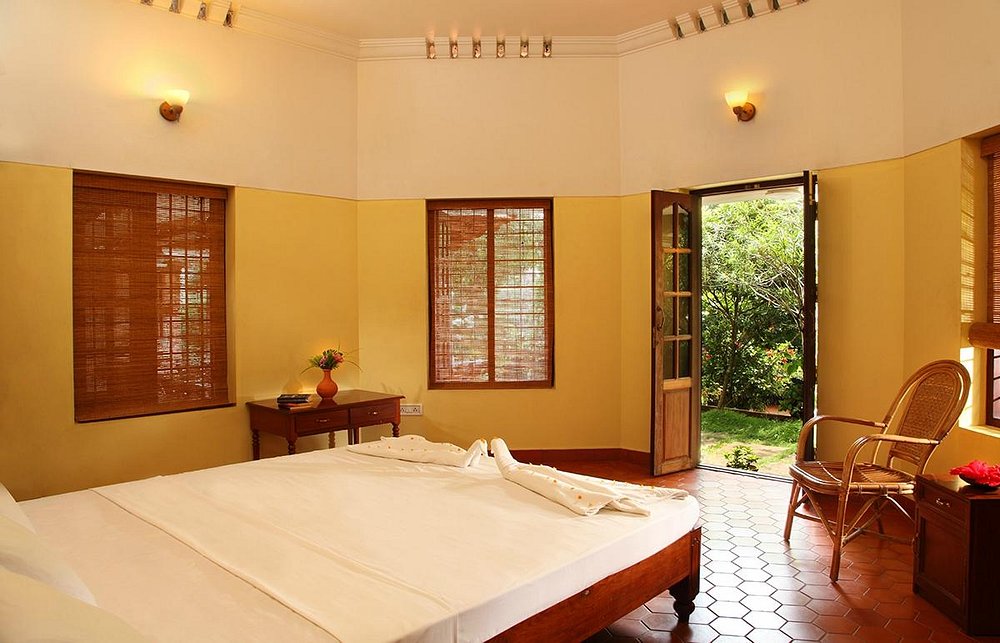
This is the thinking behind our small resort. With only eight rooms set near Vellayani Lake — green, quiet, and deliberately non-commercial — Amrutham is built around the calm that authentic care needs. Our work follows the rhythm of M·A·Y — Meditation, Ayurveda, and Yoga — held within the A.C.E. framework of Awareness, Contentment, and Equanimity, with a sattvic (vegetarian) kitchen that supports the digestive fire (agni) Ayurveda links to recovery. You can feel the place itself in our property and grounds, where the setting does much of the quiet work before a single therapy begins.
If a contemplative retreat is what you are picturing, the southern quiet around Kovalam is a natural home for it. You might begin by exploring our retreat experiences to see which arc of stillness, therapy, and practice fits your intention — and when the shape of your trip feels right, our team is glad to help you plan and book your stay, including the simple journey from the airport. Wherever you choose to base yourself in Kerala, may it be the place that gives you back exactly what you came looking for.


