
There is a particular tiredness that lives in the lower back and the base of the neck — a dull ache by mid-afternoon, a stiffness on rising, a tightness that no amount of desk-stretching seems to reach. If you have started looking into Ayurveda for back pain, it is often because that ache has become so ordinary that you stopped calling it pain and simply called it age, or work, or life.
Ayurveda looks at that ache differently. Not as a single broken part to be fixed, but as a message from the body about how it has been asked to live — too still, too hunched, too rushed, for too long. Reading it that way does not promise an instant cure. It offers something quieter and, in the long run, often kinder: a way to understand what your spine is telling you, and to support it with care rather than override it.
How Ayurveda for back pain reads the spine and neck
In Ayurveda, the body is governed by three functional principles, or humours (doshas). The one most closely tied to the spine, the joints, and the nervous system is Vata — the principle of movement, made of air and space. Vata governs every impulse that travels along the nerves, every turn of a vertebra, every signal of sensation. When it is balanced, the back feels supple and the neck moves freely. When it is aggravated, it tends to express itself exactly where it lives: as dryness, stiffness, cracking joints, shooting or radiating discomfort, and that brittle, depleted feeling along the spine.
What aggravates Vata reads almost like a description of modern working life: long hours of sitting, irregular meals, too little sleep, relentless screens, and chronic stress. Sometimes there is also heaviness or congestion in the picture — a structure-and-fluid quality Ayurveda links to Kapha, or an inflammatory heat it links to Pitta. A practitioner’s task is to read which forces are at play in your particular back, because the support that helps one pattern may not suit another. That is why Ayurveda resists one-size-fits-all advice for the spine — and why it begins, always, with looking closely at you.
The modern spine: sitting, screens, and the slow drift of posture
Long before there were ergonomic chairs, the old texts warned against the habits that wear down the back — too much sitting, too much strain, too much suppression of the body’s natural rhythms. The wisdom translates uncomfortably well to a life lived at a desk. The spine is built to move, to bend and twist and bear load through the day; asked instead to hold a single folded shape for hours, it stiffens and complains.
A few patterns show up again and again in people who arrive with aching backs and tight necks:
- The forward head: leaning toward a screen pulls the head ahead of the shoulders, loading the neck far beyond its design.
- The collapsed sit: a slumped lower back, held all day, lets the deep supporting muscles switch off and the joints take the strain.
- The frozen rhythm: little movement, little walking — exactly the stillness that aggravates the movement humour, Vata.
- The carried tension: stress rarely stays in the mind. It settles into the shoulders and the base of the neck, tightening tissue already overworked.
None of this is beyond help. But it explains why a back rarely heals through a single dramatic intervention. The forces that wore it down were small, daily, and cumulative — and the support that eases it tends to work the same way.
Ayurveda for back pain: therapies for the spine and neck
Classical Ayurveda for back pain holds a rich repertoire of warm, oil-based therapies traditionally used to calm an aggravated Vata, ease stiffness, and bring nourishment back to the tissues along the spine. None is self-prescribed — which ones suit you, in what order and for how long, is a clinical judgement made after a practitioner has read your constitution and history. With that said, these are some of the approaches you may meet within our specialised Ayurvedic therapies:
- Kati Basti: a reservoir of warm, medicated oil held over the lower back within a ring of dough, letting heat and herbs soak slowly in — one of the most familiar therapies for lower-back stiffness, and deeply soothing to sit through.
- Greeva Basti: the same principle applied to the neck — a warm-oil pool cradling the cervical region, used where ache and stiffness settle high in the spine.
- Oil massage (Abhyanga): long, warm, rhythmic strokes that ease tension, improve circulation, and quiet an overstimulated nervous system.
- Herbal poultice (Pinda Sweda): warm bundles of medicated herbs or rice pressed along tight muscles to loosen what has knotted.
Alongside these, Ayurveda works with the body’s vital points (Marma) — junctions of muscle, nerve, and energy where careful, trained pressure can release tension and ease the flow through a stiff region. You can read more about this subtler tradition in our authentic Marma treatment, often woven thoughtfully into care for a tense back or neck. Internal herbal preparations and gentle dietary adjustments may be recommended too — the aim throughout is not to silence the symptom but to address the imbalance underneath it.
Where gentle yoga and breath come in
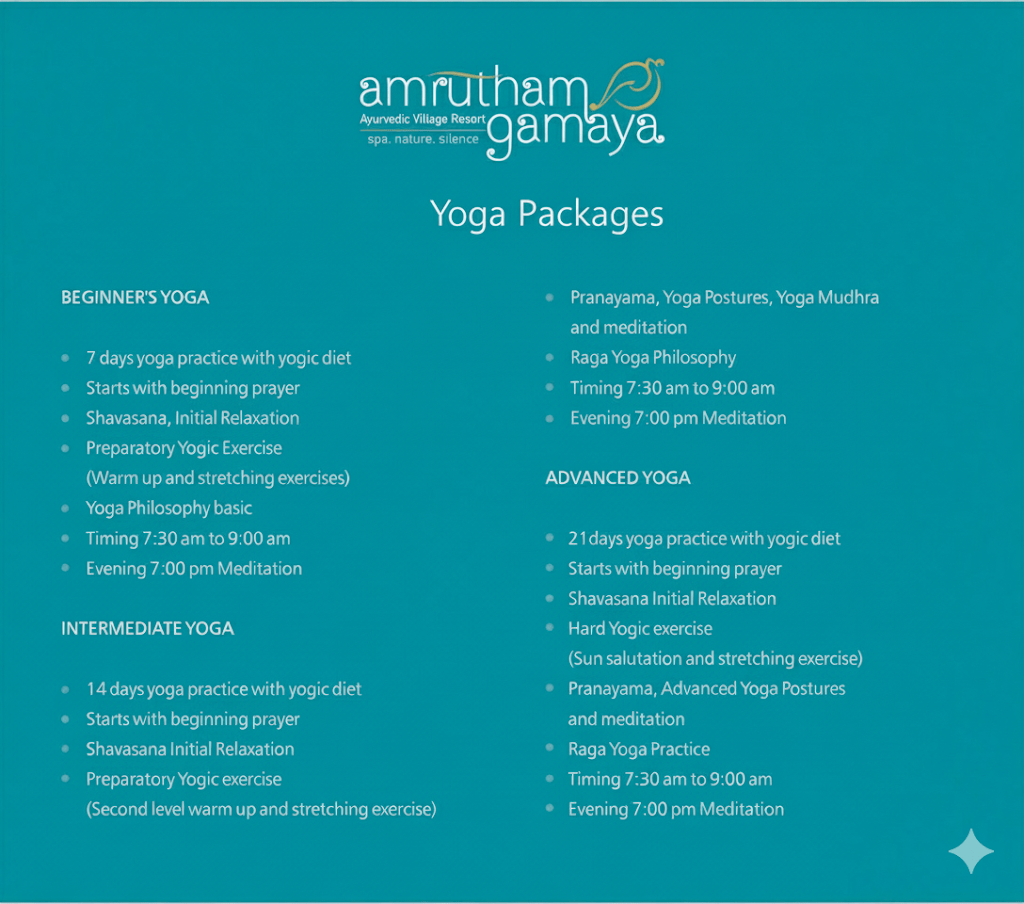
Bodywork eases a back; movement keeps it eased. But “yoga” here means something different from an ambitious class. For a sore spine, less is almost always more — slow, mindful movement that restores range without forcing it, guided by someone who can see what your body is actually doing rather than what it ought to do.
- Gentle mobility: small, careful movements that coax the spine back into its natural range, undoing the frozen rhythm of a sedentary day.
- Supported rest: restorative postures, held with props and patience, that let overworked muscles finally let go.
- Breath (Pranayama): slow, conscious breathing that calms the nervous system and softens the tension stress stores in the shoulders and neck.
Done well, gentle yoga is less a workout than a daily conversation with your spine — a way to carry the ease of the therapy room into the rest of your week. Practised under guidance, and never pushed into pain, it is one of the most sustainable supports a tired back can have.
Sensible expectations, and the place of professional care
Honesty matters most in writing like this. Ayurveda for back pain does not cure the underlying condition, and anyone who promises that you should distrust. What a thoughtful, well-guided programme may offer is more measured: relief from stiffness and tension, better mobility, calmer nerves, and a clearer understanding of the habits feeding your back pain. For many people that adds up to a back that troubles them less and a neck that moves more freely — but it is support and management, given time and continuity, not a single miracle.
A few principles keep expectations grounded and care safe:
- Begin with a consultation: nothing serious starts before a qualified practitioner has assessed your constitution and the particular pattern in your back. It is for your safety, and it is non-negotiable.
- Keep your doctor in the loop: Ayurveda sits best beside conventional medicine, not instead of it. With new, severe, or worsening pain — especially alongside numbness, weakness, or loss of bladder or bowel control — seek medical attention promptly.
- Give it time: lasting relief builds gradually, through a course of care and changed daily habits, not a single session.
- Carry it home: the diet, rhythm, and gentle movement learnt on a stay matter as much as the therapies, because the forces that ache a spine are daily ones.
A quieter setting for a tired back
There is a reason rest is woven into every serious approach to spinal care. Stress tightens the very tissue you are trying to release, and a busy, noisy environment quietly works against the therapies it surrounds. Much of what eases a back happens not on the treatment table but in the slow hours around it — the unhurried meals, the early nights, the long pauses.
That is the kind of stillness we have tried to protect. With only eight rooms, set quietly near Vellayani Lake in Kovalam and about thirty minutes from Trivandrum airport, Amrutham is built for the deliberate slowness this work asks for. Our sattvic, vegetarian kitchen supports the digestive fire (agni) Ayurveda links to recovery, and the wider M·A·Y approach — Meditation, Ayurveda, and Yoga — means your back is never treated in isolation, but as one thread in a whole life you are invited to turn back toward. We call that a U-turn inward, and a sore spine is often where it begins.
If the ache in your back or neck has become a quiet companion you have stopped questioning, perhaps it is worth listening to it differently. A focused course of Spine & Neck Care at Amrutham will not promise to fix you overnight — but it offers a considered, classical, professionally guided way to ease the tension, support the structure, and live a little more kindly with the spine that carries you.


