
You have read about the Panchakarma benefits people describe — the deep cleansing therapy at the heart of Ayurveda — and something in you has gone quiet and curious. Perhaps it is the tiredness that sleep no longer touches, or a digestion that has grown heavy and slow, or simply the sense that you have been running for a long time and have forgotten how to stop.
It is a fair and honest question to ask before you book anything: is this actually right for me, right now? Panchakarma is profound, but it is not a spa treatment and it is not for everyone in every season of life. Here is a clear, unhurried look at who tends to benefit, who is wiser to wait, and why a real conversation with a practitioner matters more than any article — including this one.
What Panchakarma actually is
Panchakarma — literally the "five actions" — is Ayurveda's structured process for clearing accumulated toxins (ama) from the body and restoring balance to your constitution (Prakriti). It is not a single massage or a quick reset. A genuine programme unfolds in three movements: a preparation phase that loosens what has settled deep in the tissues (using warm medicated oils and gentle therapies), the cleansing actions themselves, and an equally important phase of rebuilding — rest, careful food, and the slow rekindling of your digestive fire (agni).
That arc is the whole point. Because it works at the level of tissue and metabolism rather than symptom, the deepest Panchakarma benefits are more like tending a garden than flipping a switch — which is precisely why suitability, timing, and supervision all matter.
Panchakarma benefits: who tends to gain most
The Panchakarma benefits are traditionally felt most by people who are broadly well but feel worn down, clouded, or out of rhythm. If you recognise yourself in the list below, this may be a season where deep cleansing genuinely serves you.
- Persistent stress and a tired mind: when the nervous system has been held tight for months and rest alone no longer settles it.
- Fatigue that lingers: a heaviness or low energy that is not explained by an acute illness, where the body seems to need clearing rather than fixing.
- Sluggish or irregular digestion: bloating, heaviness after meals, or the feeling that your system has simply slowed down.
- General renewal: those in reasonable health who want a seasonal reset — clearer, calmer, and more grounded — and the discipline to support better habits afterwards.
- A wish to go deeper than a holiday: people ready for a U-turn inward, not just a change of scenery.
For someone in this position, a guided Detox programme rooted in classical Panchakarma can be a gentle but powerful way to clear what has accumulated and begin again — provided the timing and the body are right.
Who should wait — or speak to a doctor first
This is where honesty matters most. Panchakarma is a cleansing process, and a body that is depleted, acutely unwell, or otherwise vulnerable may need building up and medical care rather than clearing out. None of the following is a verdict — it is simply a signal to pause and consult, not to book impulsively.
- Pregnancy and the postnatal months: classical Panchakarma is generally not advised during pregnancy or soon after birth; gentler, nourishing care is the traditional path here.
- Acute illness, fever, or infection: when the body is fighting something now, it needs rest and treatment first — cleansing can wait until you are stable.
- The very frail, the very depleted, or the elderly in poor health: cleansing therapies can be too much for a system with little reserve; nourishment may be the wiser route.
- Serious or unstable medical conditions: heart conditions, uncontrolled diabetes or blood pressure, recent surgery, severe organ disease, or any condition managed with essential medication — discuss it with your doctor before considering any cleanse.
- Children, and anyone unsure: when in doubt, ask. A few honest questions answered beforehand are worth far more than a programme begun too soon.
If a chronic condition is what brings you here, Panchakarma may still have a place — but as part of a wider, supervised plan rather than a stand-alone reset. Our specialised therapies for specific concerns are designed for exactly this: targeted, classical treatment shaped around what your body is actually carrying, decided together with a qualified practitioner.
Why the consultation comes first
You may have noticed how careful the language above is — "may support", "traditionally used for", "can help relieve". That is deliberate. Ayurveda is a living tradition with centuries of observation behind it, and it is also a system that insists on the individual. Two people with the same complaint can have very different constitutions, and what cleanses one may unbalance the other.
This is why a proper assessment is not a formality but the heart of the work. Before any therapy begins, a qualified practitioner reads your constitution, your current imbalance, your medical history, and your medications, and then shapes — or sets aside — the programme accordingly. No honest centre will hand you a cleanse without that conversation, and you should be wary of any that would.
So the most useful thing we can offer is not a promise but an invitation to talk. If you are weighing whether the timing is right, or whether a particular condition makes Panchakarma unwise for now, simply reach out and tell us where you are. We would far rather guide you toward the right step — even if that step is to wait — than usher you into the wrong one.
Panchakarma benefits follow readiness — how to know you are ready
Beyond the clinical questions, there is a quieter kind of readiness that has little to do with diagnosis and everything to do with willingness. Panchakarma asks something of you — slowness, simplicity, and the patience to let the body do its own work.
- You can give it real time: deep cleansing and its rebuilding phase cannot be rushed into a long weekend; a meaningful programme needs unhurried days.
- You are willing to keep it simple: light sattvic (vegetarian) food, early nights, gentle rhythm, and a pause from the usual stimulation.
- You are ready to feel, not perform: a cleanse can stir up tiredness or emotion before it brings lightness; that is part of the turning, not a setback.
- You want guidance, not just a getaway: you welcome being assessed, advised, and occasionally told to wait.
If that resonates, you are likely closer to ready than you think. If it makes you tense, that is worth listening to as well — perhaps now is a season for rest and nourishment, and Panchakarma is for a little later.
A gentle, honest place to begin
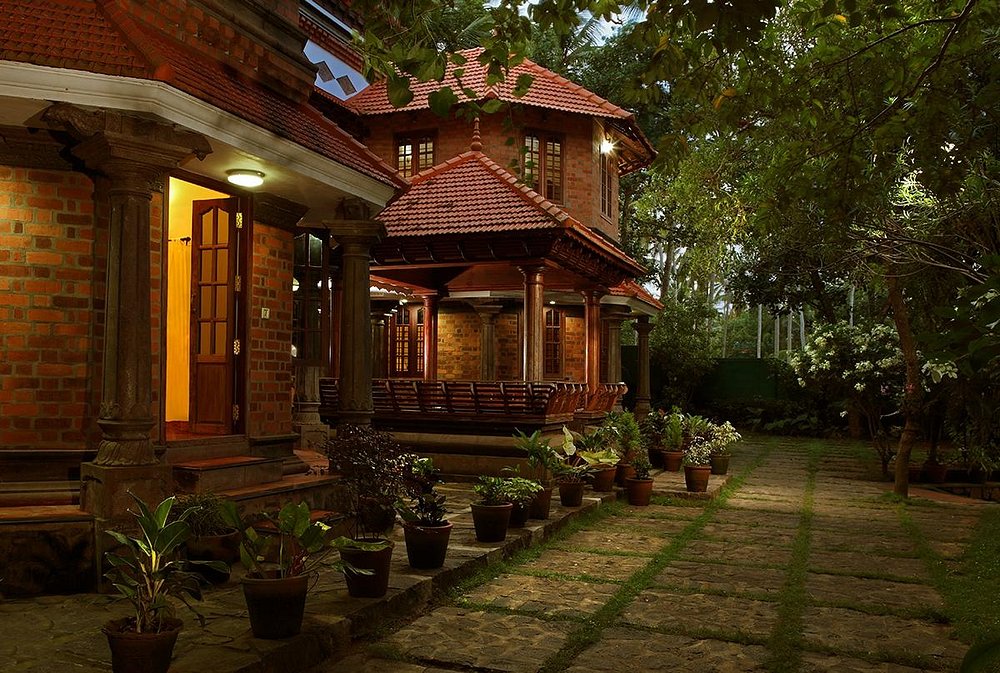
At Amrutham, our small resort in Kovalam, Kerala — just eight rooms, set in quiet nature near Vellayani Lake — we hold to the rhythm of M·A·Y: Meditation, Ayurveda, and Yoga. We do not claim perfection, and we will never sell you a cleanse you do not need. What we promise is honesty, presence, and deep care: qualified practitioners, classical therapies, sattvic food, and the time and space for a true U-turn inward.
If Panchakarma feels right for this chapter of your life — or if you are simply unsure and would value an honest answer — the kindest next step is a conversation. Tell us how you are, what you are carrying, and what you hope for, and we will help you find the way forward that truly serves you.


