
The word Panchakarma can sound a little daunting before you understand it. It arrives wrapped in unfamiliar Sanskrit, hints at deep cleansing, and seems to ask something serious of you. Yet at its heart the five types of Panchakarma rest on one of the oldest and gentlest ideas in all of medicine — that the body knows how to clear what no longer serves it, and sometimes simply needs to be helped to do so.
Panchakarma (literally the “five actions”) is Ayurveda’s classical method for releasing accumulated toxins (ama) and restoring balance to your constitution (Prakriti). The aim is not to strip you bare but to lighten you — to let you feel clearer, calmer, and more at home in yourself. Here, gently and without alarm, are the five types of Panchakarma and what each actually involves.
Before the types of Panchakarma: a word about preparation
Before the five actions begin, there is always a quiet preparation. This opening phase — Purvakarma — softens and mobilises what has settled deep in the tissues, usually through warm oil massage (Abhyanga) and gentle herbal steam (Swedana). Think of it as loosening the soil before anything is cleared. Only once the body is supple and ready does a practitioner consider whether any of the cleansing actions are appropriate at all.
That sequence matters, because Panchakarma is never a single fixed protocol applied to everyone. The five types of Panchakarma are a menu from which a qualified practitioner chooses — guided by your constitution, your current state of balance (or imbalance), the season, your strength, and your goals. Many guests receive only one or two of the five. Almost no one needs all of them.
Vamana — clearing from above
Vamana is therapeutic emesis — a supervised, medicated clearing through the upper pathways. After days of preparation in which the body is encouraged to bring excess to the surface, a gentle herbal preparation helps release it. It is traditionally used for conditions linked to excess Kapha (the earth-and-water energy that governs structure and moisture) — heaviness in the chest, congestion, sluggish digestion, certain skin and respiratory patterns.
It sounds more dramatic in description than it feels in practice. Carried out by experienced hands, at the right moment and never in haste, it is a brief, contained step followed by rest, warmth, and easy nourishment. It is also among the more selective of the five — offered only when constitution and condition genuinely call for it.
Virechana — a downward release
Virechana is therapeutic purgation — a gentle, herb-led clearing through the lower pathways. Where Vamana works upward, Virechana works downward, and it is the action most often associated with Pitta, the fire-and-water energy that governs metabolism, warmth, and transformation. It is traditionally drawn upon for heat-related imbalances: inflammation, certain liver and digestive complaints, and skin conditions that run hot and irritable.
For many people, Virechana feels like the most approachable of the cleansing actions — measured, well-tolerated, and followed by a distinct sense of lightness. It is precisely this kind of considered release that anchors a guided programme such as our Detox Package, where every step is paced to your body rather than to a clock.
Basti — the medicated enema, and the most versatile of the five
Basti introduces warm medicated oils or herbal decoctions through the lower passage, and classical texts hold it in unusually high regard — some describe it as half of all treatment. It is the action most closely tied to Vata, the air-and-space energy that governs movement, the nervous system, and the joints. Because Vata so often sits behind dryness, restlessness, and depletion, Basti is frequently the most nourishing of the five rather than the most clearing.
It is traditionally used to support:
- Mobility and joints: easing the stiffness and dryness that Vata imbalance can bring.
- The nervous system: settling restlessness, supporting steadier rest and a calmer mind.
- Digestion and elimination: helping restore a natural, unforced rhythm.
- Strength and lubrication: replenishing tissues that feel depleted or dry.
Its versatility is exactly why it appears so often across our specialised therapies — from spine and joint care to deeper restorative work — always matched to the person in front of us.
Nasya — through the nose, toward the head
Nasya is nasal therapy: a few drops of medicated oil administered through the nostrils, usually after a soothing face, neck, and shoulder massage. In Ayurveda the nose is considered a doorway to the head, so Nasya is traditionally turned to for the regions above the collarbone — sinus congestion, tension headaches, mental fog, dryness, and the kind of stiffness that gathers in the neck and shoulders.
Of all five actions, this is often the one guests find most immediately pleasant. It is brief, deeply relaxing, and frequently leaves a feeling of openness and clarity behind the eyes — a small ritual with a quietly outsized sense of relief.
Raktamokshana — refining the blood
Raktamokshana means blood-letting, though the term is far gentler in practice than it is on the page. It is a traditional method of purifying the blood — sometimes using leech therapy, sometimes other classical techniques — and it is the most specialised and least commonly used of the five. It is reserved almost entirely for specific Pitta- and blood-related conditions, such as certain stubborn skin disorders, where a practitioner judges it genuinely warranted.
We mention it for completeness, because it belongs to the classical five — but please don’t picture it as part of an ordinary restful stay. It is a precise, situational therapy, offered rarely and only after careful assessment.
Which types of Panchakarma you need — the practitioner decides
If there is one thing to carry away from all of this, it is that you are never meant to decide which actions you need. That is the practitioner’s work. A genuine Panchakarma begins with consultation and observation — pulse, constitution, history, and the simple human question of how you actually feel — and the programme is shaped around the answers. What suits one person may be entirely wrong for another, and a good practitioner is as willing to leave actions out as to include them.
This is also why Panchakarma asks for unhurried time and proper rest rather than a quick weekend fix. Done well, it is restorative, not depleting — and it should always be undertaken with qualified guidance, never improvised at home. For those drawn to understand the method from the inside, our 21-Day Panchakarma Certification opens the same classical knowledge to practitioners and serious students.
A gentle landing at Amrutham
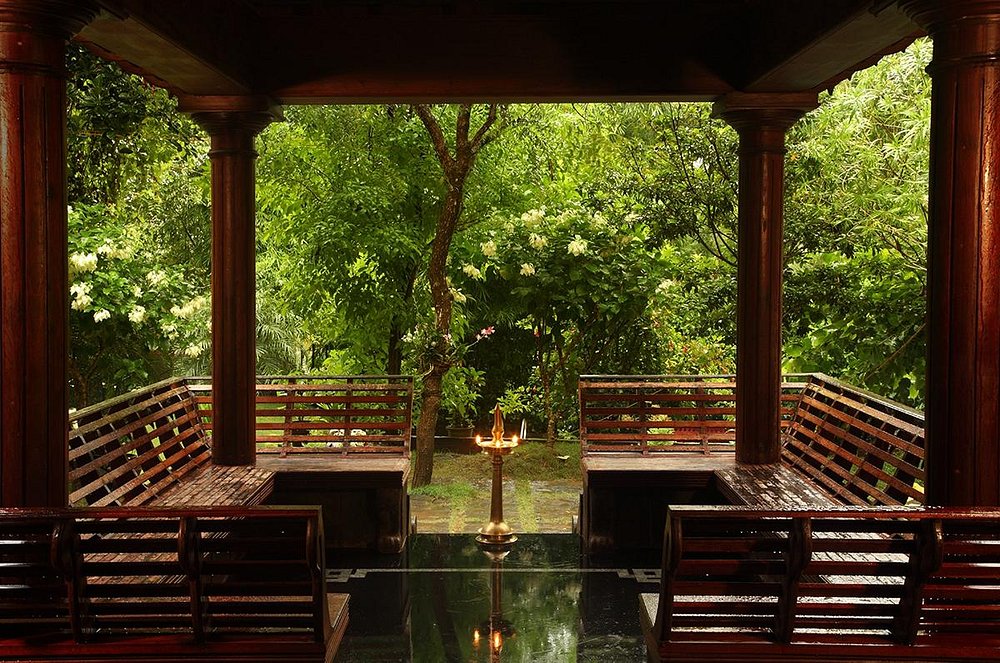
At Amrutham, set quietly among the greenery of Kovalam near Vellayani Lake, cleansing is never rushed and never imposed. With only eight rooms, every programme unfolds at a human pace — guided by experienced practitioners, supported by sattvic (pure vegetarian) food, and held within the stillness that real renewal needs. Panchakarma, approached this way, is less a treatment to endure than a U-turn inward: a chance to feel lighter, clearer, and more yourself.
If a gentle, guided reset is calling to you, this is a kind and unhurried place to begin.


