
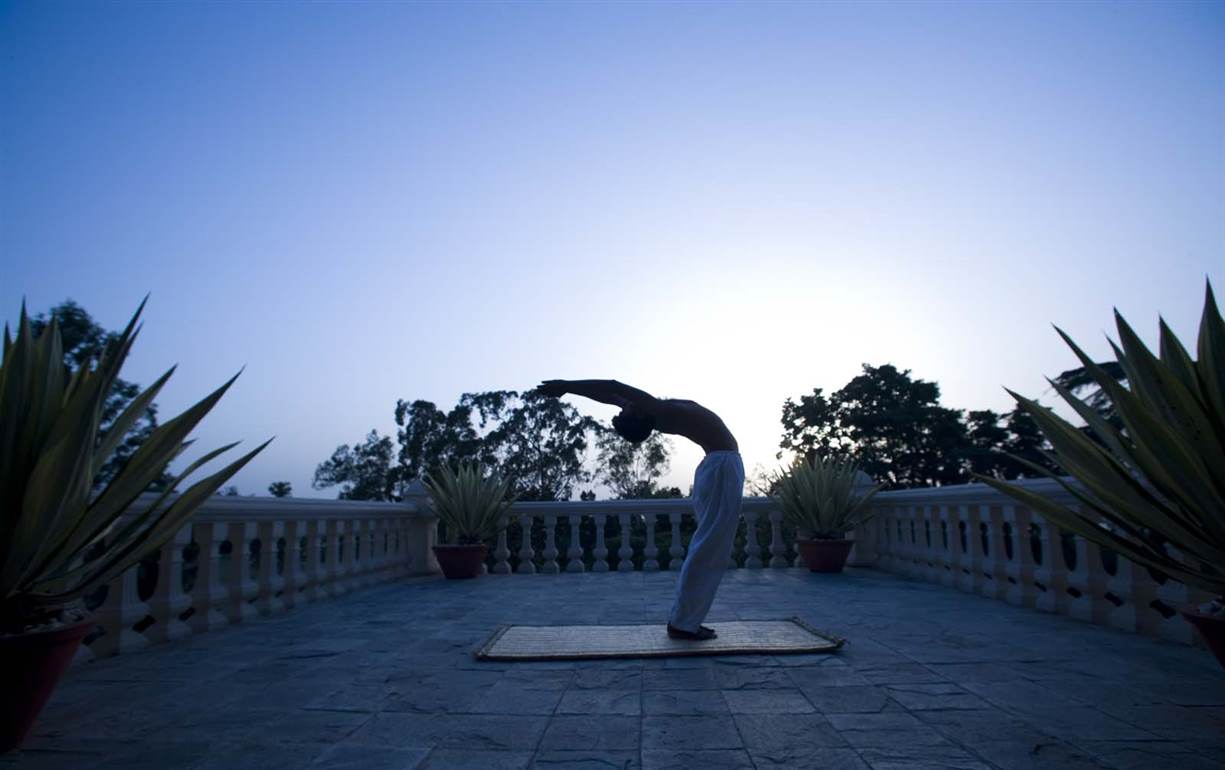
The certificate arrives, the final practicum ends, and the room you trained in slowly empties. Then comes the quiet, slightly daunting question that no certificate can answer for you: now what? Learning how to teach yoga after certification is a different journey from learning the postures yourself — gentler in some ways, harder in others, and far more about presence than perfection.
If you are standing at this threshold — newly qualified, full of knowledge yet unsure how to share it — take heart. Almost every teacher you admire once stood exactly where you are. What follows is an honest, unhurried look at the first steps, the inner work, and the small disciplines that turn a graduate into a teacher.
Why teaching feels harder than training
During training, the attention flows inward. You refine your own breath (pranayama), deepen your own practice, and absorb the philosophy. Teaching reverses that flow entirely. Suddenly the practice is no longer about you — it is about the person on the mat in front of you, their stiff shoulders, their nervous breath, their unspoken hopes.
This shift can feel disorienting. You may know a posture intimately in your own body yet struggle to describe it to someone else. That gap is not a failure; it is simply the next stage of learning. Yoga as it is practised and taught today draws on a long lineage of transmission from teacher to student, and stepping into that lineage takes time, patience, and repetition.
First steps: how to teach yoga after certification
You do not need a studio, a logo, or a website to begin. The most grounded teachers usually start small, close to home, with people who already trust them. Here are practical first moves as you work out how to teach yoga after certification:
- Teach friends and family first: a living room and two or three willing bodies is enough. Real teaching teaches you faster than any rehearsal.
- Assist an experienced teacher: offer to help in a class you already attend. Watching how a seasoned teacher reads a room is an education in itself.
- Keep your own practice alive: you can only offer from a full cup. A daily practice keeps your teaching honest and embodied.
- Start with short, simple sequences: a clear thirty-minute class taught well is worth more than a clever ninety-minute one taught anxiously.
Each small class is a rehearsal for the next. Confidence is not something you wait to feel before you teach — it is something teaching slowly gives you.
Cueing, sequencing, and holding the room
The craft of teaching lives in the details. Most new teachers over-explain, filling silences with words. Learning to say less — and to trust the breath and the body to do their work — is one of the quiet arts of the profession.
- Cue what matters: name the foundation, the breath, and one or two key actions. Let the rest settle on its own.
- Sequence with intention: build warmth gradually, arrive at a peak, then guide the body back down towards rest (Savasana). A class should have an arc, like a story.
- Watch more than you speak: your eyes are your most useful teaching tool. Adjust the pace to the people in front of you, not the plan in your notebook.
- Honour different bodies: offer variations openly, so that the stiff, the strong, and the recovering all feel welcome.
Holding a room is less about authority than about safety. When students feel safe, they soften — and a softened student learns far more than a striving one.
The inner work no certificate prepares you for
Teaching exposes you. It asks you to stand in front of others, speak with conviction, and remain calm when a sequence falls apart. The deepest preparation, then, is not anatomical but inward — the steady cultivation of awareness, contentment, and equanimity that we call the A.C.E. framework here at Amrutham.
The teachers who endure are rarely the most flexible or the most charismatic. They are the ones who have done their own inner work — who have made their own U-turn inward and learned to meet their nerves without being ruled by them. Meditation, honest self-study, and a willingness to keep being a student long after you become a teacher are what keep the practice alive in you. To understand the spirit that shapes this approach, you may find it helpful to read more about Amrutham and the philosophy of Meditation, Ayurveda and Yoga that we hold close.
Keep deepening: training never really ends
A first certification opens a door; it does not complete a journey. The most fulfilled teachers treat learning as lifelong, returning again and again to refine their understanding of breath, alignment, and philosophy. If you are wondering how to teach yoga after certification in a way that keeps growing rather than plateauing, the answer is simple: never stop being taught.
- Specialise gently: over time, you may feel drawn to restorative work, pranayama, or therapeutic teaching. Follow that pull.
- Seek immersive study: a residential setting, away from daily distractions, deepens both your practice and your teaching in ways a weekly class cannot.
- Stay rooted in tradition: ground your teaching in the wider context of yoga and our other contemplative courses, so it carries depth and not merely technique.
Whether you continue with structured yoga offerings or simply commit to a quiet daily practice, the principle holds: a teacher who keeps learning teaches from a living source.
A place to begin — or begin again
At Amrutham, set among the quiet greenery of Kovalam near Vellayani Lake, we hold space for teachers at every stage — those taking their first steps and those returning to refill the cup. In an intimate setting, with qualified practitioners and the calm rhythm of retreat, the questions that felt overwhelming begin to settle into something gentler, clearer, and more grounded.
If you feel called to deepen your foundation and step into teaching with confidence, we would be glad to walk a little of that path with you.
Continue Exploring
- Is Yoga Teacher Training Worth It If You Don't Want to Teach?
- Kalari Marma Points: The Heart of Kalari Uzhichal Healing
- Kalari Massage Benefits: What Uzhichal Is and Is Not
- Kalari Massage for Athletes: Kerala's Warrior Bodywork
- Kalari Massage vs Ayurvedic Massage: How Kerala's Two Healing Touches Differ


