
There is a particular kind of quiet that arrives after a long run — legs heavy, breath settling, the mind unusually clear. Yet for many of us who run, that clarity comes packaged with tight hamstrings, aching hips, and shoulders that never quite let go. This is where yoga for runners becomes less of an optional add-on and more of a quiet necessity — a way to give back to a body that carries you mile after mile.
Running is repetitive by nature. The same muscles fire, the same joints absorb impact, the same forward motion repeats thousands of times. Over months and years, this builds remarkable endurance — and equally remarkable imbalances. A thoughtful yoga practice does not ask you to run less. It simply helps you run with more freedom, fewer niggles, and a steadier mind.
Why yoga for runners makes such a difference
Runners tend to be strong in a narrow band of movement and stiff almost everywhere else. The forward-driving stride shortens the hip flexors and calves, the constant impact tightens the lower back, and the unconscious clench of the upper body restricts the breath. Yoga gently widens that band — restoring length where running has created tightness, and stability where repetition has created wobble.
The benefits most runners notice are wonderfully practical:
- Greater range of motion: opening the hips, hamstrings, and ankles can lengthen your stride without forcing it.
- Better balance and stability: single-leg poses train the small stabilising muscles that protect the knees and ankles on uneven ground.
- Calmer, deeper breath: breath awareness (Pranayama) teaches you to draw on your full lung capacity, which can steady your effort on longer runs.
- Faster recovery: gentle stretching and conscious relaxation may help ease the residual tension that lingers after hard sessions.
- A quieter mind: the meditative thread of yoga supports the mental resilience that distance running quietly demands.
None of this replaces sensible training or medical advice — if you carry a persistent injury, please consult a physiotherapist or doctor first. But as a companion to your running, the case is strong. Yoga is an ancient discipline of breath, movement, and stillness; you can read a grounded overview of its history and forms on the Wikipedia entry for yoga.
Where runners hold tension
Before choosing poses, it helps to know your own geography of tightness. Most runners share a familiar map:
- Hip flexors: shortened by the forward stride and by long hours seated between runs.
- Hamstrings and calves: chronically tight from repeated contraction and impact.
- The outer hip and IT band region: often overworked and a common source of knee complaints.
- Lower back: braced against each landing, rarely allowed to soften.
- Neck and shoulders: quietly clenched, especially in the final miles.
Naming these areas turns a vague stiffness into something you can actually work with — one breath, one pose at a time.
A simple yoga for runners sequence
You do not need an elaborate routine. A handful of well-chosen poses, practised consistently, will serve you far better than an ambitious sequence you abandon after a week. Move slowly, breathe through your nose, and never force a stretch to the point of strain.
- Low lunge (Anjaneyasana): opens the hip flexors that running keeps short. Sink gently and let the front of the back-leg hip lengthen.
- Downward-facing dog (Adho Mukha Svanasana): releases the calves, hamstrings, and shoulders all at once. Pedal the heels slowly.
- Pigeon pose (Eka Pada Rajakapotasana): a deep opener for the outer hip and glutes — go gently, and use a cushion under the hip if needed.
- Standing forward fold (Uttanasana): lengthens the whole back line of the body and lets the spine decompress.
- Reclined twist (Supta Matsyendrasana): eases the lower back and invites the nervous system to settle.
- Legs-up-the-wall (Viparita Karani): a restful, restorative finish that can help tired legs recover.
Hold each pose for several slow breaths — long enough for the tissue to soften, never so long that you grip. On recovery days, this gentle practice is enough on its own; before a run, keep it brief and dynamic rather than deeply static.
Breath: the runner's hidden ally
Ask most runners what limits them on a hard climb, and they will say their breath. Yet few of us train it. Pranayama — the yogic art of conscious breathing — teaches you to use the diaphragm fully, to lengthen the exhale, and to stay composed when effort rises. Over time, this carries directly into your running: a calmer breath is a calmer body, and a calmer body lasts longer.
This is also where running and meditation begin to meet. Both ask for presence — attention to this stride, this breath, this moment. Many runners are surprised to find that a few minutes of breath practice does more for their racing nerves than any pep talk. If you would like to explore that meeting point in a structured way, the Prana package places breath and stillness at its centre.
Practising with guidance at Amrutham
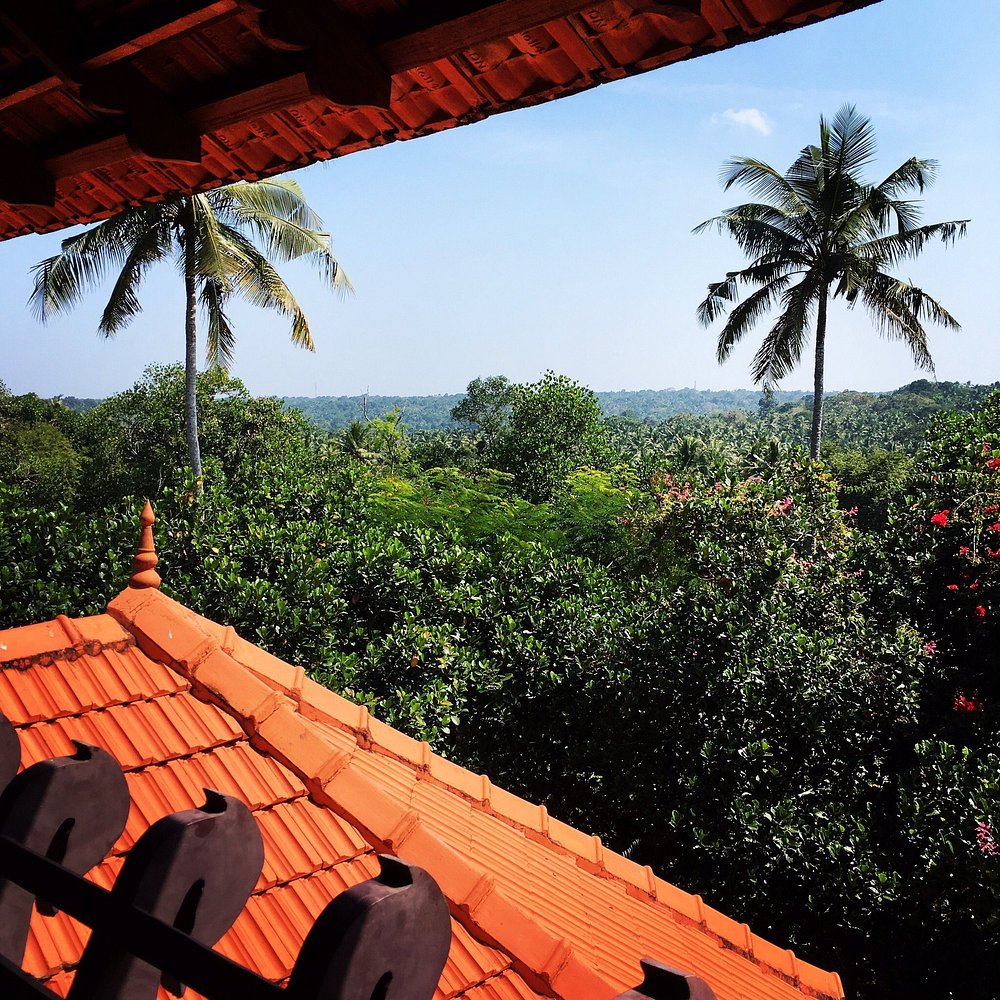
Self-practice will take you a long way, but there is real value in learning under an experienced eye — someone who can spot the subtle compensations your body has learned over years of running, and gently guide you out of them. At Amrutham, set among the green quiet of Kovalam, near Vellayani Lake, yoga is taught as part of a larger rhythm of meditation, Ayurveda, and yoga — what we call a U-turn inward, a return to yourself.
For runners, this slower setting is a gift. Away from training plans and split times, you can rebuild the suppleness and breath capacity that hard running steadily erodes. Our Yoga package offers guided practice suited to your level, and you can browse the wider range of our yoga offerings to find the rhythm that fits you. Those wanting a fuller reset often choose one of our retreats, where yoga, rest, and sattvic (vegetarian) food work together.
Whether you run marathons or simply lace up at dawn for the love of it, your body deserves the same patient care you give your training. Come unwind what the miles have wound tight — clearer, calmer, and more grounded — and discover how yoga for runners can become the quiet foundation beneath every stride.


