
There is a kind of rest that ordinary sleep rarely reaches — a stillness where the body lets go completely, yet a quiet thread of awareness stays awake. This is the territory of yoga nidra, often translated as "yogic sleep": a guided, lying-down practice of conscious deep relaxation. You do nothing, go nowhere, and strive for nothing — you simply lie still and listen, and the nervous system begins to soften on its own.
For many travellers who arrive at our sanctuary tired in a way that a holiday cannot quite touch, this practice becomes an unexpected favourite. It asks for no flexibility, no fitness, no experience — only your willingness to be horizontal and gently led. In the pages below we share what it is, what a session feels like, and why it has been so quietly treasured for so long.
What Is Yoga Nidra?
The Sanskrit term joins two words — yoga (union) and nidra (sleep) — to describe a state on the threshold between waking and sleeping. In yoga nidra you rest in a posture of complete ease (Savasana, the "corpse pose"), eyes closed, while a teacher's voice guides your attention through a sequence of inner landmarks. The body appears to sleep; a slender filament of awareness remains.
Although its roots reach back into the tantric and meditative traditions of India, the modern, structured form most teachers use today was shaped in the twentieth century and has since travelled the world. You can read a broader, neutral overview on the Wikipedia entry for yoga nidra. It is best understood not as a technique you perform, but as a state you are invited to fall into — softly, without effort.
What a Yoga Nidra Session Feels Like
A session usually lasts twenty to forty-five minutes, and almost everyone is surprised by how quickly the time dissolves. You lie down, settle, and let the practice carry you. While every teacher has their own rhythm, most sessions move gently through a few familiar stages:
- Settling and intention (Sankalpa): you arrive in stillness and, if you wish, plant a short, heartfelt resolve (Sankalpa) — a calm phrase in the present tense, such as "I am at peace."
- The body scan: the voice names part after part — right thumb, palm, wrist, arm — and your attention drifts to each in turn. Tension you didn't know you held quietly unwinds.
- Breath awareness: you watch the natural breath, perhaps counting it backward, letting it slow without forcing. The breath becomes an anchor that keeps you on the near side of sleep.
- Feeling and imagery: gentle opposites — heaviness and lightness, warmth and coolness — or soft images may be evoked, drawing the mind inward and away from its usual chatter.
- Returning: the resolve is revisited, and you are slowly, kindly led back to ordinary waking — often clearer, calmer, and more rested than you arrived.
There is no right way to experience it. Some people stay alert throughout; others drift in and out; a few fall fully asleep and wake at the closing words. All of it is welcome. The practice is forgiving by design.
What Yoga Nidra Is Traditionally Valued For
Yoga nidra has long been cherished as a doorway to deep rest, and contemporary teachers and practitioners turn to it for a handful of gentle, well-loved reasons. We offer these in the honest spirit of tradition and lived experience — not as medical promises.
- Profound rest: a single session can feel restorative out of all proportion to its length — which is why it is sometimes described as concentrated rest for tired bodies and busy minds.
- Calming the nervous system: lying still and following the voice invites the body's "rest and digest" response, easing the grip of everyday stress and tension.
- Support for sleep: many who struggle to wind down find that a regular practice can help relieve restlessness and ease the path into natural sleep.
- Quieter mind, softer mood: by drawing attention inward, it can create a little distance from racing thoughts, leaving you feeling more settled and at ease.
As with any practice that touches mind and body, what you feel will be your own. If you live with a diagnosed condition — insomnia, anxiety, or anything else — yoga nidra can sit beautifully alongside, but never in place of, the care of a qualified professional. We always encourage you to keep that conversation going.
Yoga Nidra in the Wider Rhythm of a Stay
At Amrutham, rest is not an afterthought — it is part of the path. Our philosophy of M·A·Y (Meditation · Ayurveda · Yoga) treats deep relaxation as a true discipline, woven into the gentle architecture of a day. A morning of breath and movement, an afternoon of Ayurvedic care, and an evening that ends in stillness all belong to the same arc: a slow U-turn inward, a return to yourself.
Practices like yoga nidra also pair naturally with the cleansing and restorative work of Ayurveda. After a soothing oil therapy, the body is already primed to let go; a guided relaxation deepens that release. If you are drawn to that union of stillness and treatment, our Prana package that blends Ayurveda with Yoga is designed exactly around it. Those seeking the most spacious quiet of all may feel called toward our Signature silent retreat, where days unfold with very few words.
Beginning Your Own Practice
You need very little to begin. A quiet space, a mat or bed, a folded blanket for warmth, perhaps a thin cushion beneath the knees. Lie down, let yourself be still, and follow a teacher's voice — whether in person or through a recording. A few small kindnesses make it easier:
- Stay warm: the body cools as it relaxes, so cover yourself before you start.
- Release the goal: there is nothing to achieve. Falling asleep is not failing; staying awake is not winning.
- Let it be regular: like all gentle practices, yoga nidra reveals itself slowly, gift by gift, when you return to it often.
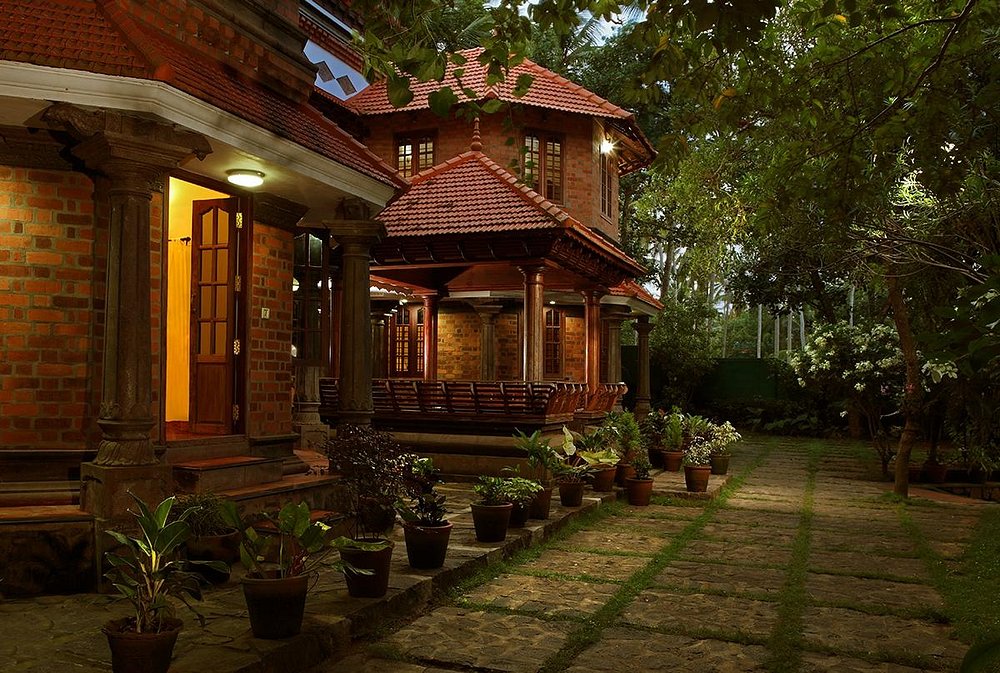
To experience it within a wider practice — guided by qualified teachers, in the green quiet near Vellayani Lake — explore the breath, movement, and deep relaxation of our Yoga offering at Amrutham.
In a world that prizes doing, yoga nidra offers the rare permission to simply be — to lie down, let go, and trust that rest itself is enough. We would be glad to hold that space for you: clearer, calmer, and quietly restored.


