
Few words in wellness travel carry as much mystery — and as much misunderstanding — as Panchakarma. Many of the most persistent Panchakarma myths cast it as a spa indulgence, a quick fix, or an ordeal to endure. The truth is gentler and far more interesting: Panchakarma (literally "five actions") is an individualised, staged therapeutic process from Ayurveda, designed to remove deep-seated toxins (ama) and restore balance, one careful step at a time.
If you have been quietly wondering whether it is "for you", you are not alone. Let us walk through the most common misunderstandings together — not to correct you, but to free Panchakarma from the stories that hide what it genuinely is.
Panchakarma Myths, Part 1: "It's just a relaxing massage holiday"
It is easy to see where this idea comes from. There is warm oil, there are skilled hands, and there is deep rest. But a Panchakarma is not a sequence of massages chosen for pleasure — it is a clinical protocol shaped around your constitution (Prakriti) and current imbalance (Vikriti).
The oil massage (Abhyanga) you receive, the herbal steam, the gentle pouring of oil on the forehead (Shirodhara) — each has a purpose within a larger arc. They prepare the body to release what it has been holding, rather than simply soothing the surface. According to the overview of Panchakarma in classical Ayurveda, the therapies are sequenced as preparation, the main cleansing actions, and a gradual return to ordinary life. Rest is part of the medicine, not the whole of it.
Myth 2: "It's an instant weight-loss programme"
This is perhaps the most understandable of the Panchakarma myths, and the one we most gently set aside. Panchakarma is not a crash diet, and it does not promise numbers on a scale.
What it does, traditionally, is help rekindle your digestive fire (agni) and clear the metabolic congestion that can leave the body feeling heavy and sluggish. For some people, that supports a more natural relationship with weight over time — but as part of restored balance, not as a headline result. If weight and metabolic health are genuinely your concern, a more focused path such as our Obesity Management therapy may suit you better than expecting Panchakarma to be a slimming course in disguise.
We always encourage you to think in terms of vitality rather than reduction — lighter, clearer, and more grounded, rather than simply smaller.
Myth 3: "It's a luxury spa package"
Some retreats do market Panchakarma as a premium indulgence, wrapped in the language of pampering. We understand the appeal — but it quietly mistakes the nature of the work.
A genuine Panchakarma is therapeutic, not transactional. It is overseen by qualified Ayurvedic practitioners, follows classical texts, and asks something of you in return: simplicity. During a true cleanse you eat a quiet, sattvic (pure vegetarian) diet, you slow down, and you let the days grow spacious. The luxury, if there is one, is in being properly cared for — in being seen as a whole person rather than a guest to be entertained.
- A spa: aims to relax and refresh you for a day or two.
- A Panchakarma: aims to cleanse and rebalance you over a structured course of days, under supervision.
- The overlap: both can feel deeply restful — but only one is a clinical process.
Myth 4: "Everyone gets the same treatments"
This is where the difference between a spa menu and an Ayurvedic cleanse becomes clearest. There is no single, standard Panchakarma that everyone receives. The "five actions" are a toolkit, and a practitioner selects from them based on you.
Your constitution, your imbalance, your age, the season, your strength on a given day — all of these shape what is offered and what is gently withheld. Two people arriving on the same morning may follow quite different paths. The process typically unfolds in three movements:
- Purvakarma (preparation): oil therapies and warmth to loosen toxins and ready the body.
- Pradhanakarma (the main actions): the cleansing therapies themselves, chosen for your needs.
- Paschatkarma (after-care): a careful, staged return to normal diet and rhythm.
Because it is so individual, a consultation comes first. You can explore how this works within our classical Ayurveda programme, where the treatments are shaped around the person, never the package.
Panchakarma Myths, Part 5: "It's unpleasant, and only for the seriously ill"
Among all the Panchakarma myths, this one keeps the most people away — and it deserves the kindest answer. A well-run Panchakarma is not an ordeal. The preparation phase is, for most people, deeply pleasant: warm oil, rest, nourishing food, long sleep.
The cleansing actions are intentionally gentle and adapted to your strength; a good practitioner never pushes the body beyond what it can comfortably meet. You may feel a little tired or tender as toxins clear — that is the body doing quiet work, not the treatment going wrong — and you are supported throughout. Nor is Panchakarma only for the unwell. It has long been used as a seasonal reset by people who simply feel heavy, foggy, or out of rhythm, and who want to return to themselves.
What Panchakarma genuinely is
Set the myths aside and a calmer picture appears. Panchakarma is an individualised, staged, supervised process — preparation, cleansing, and recovery — that may support better digestion, clearer energy, and a deeper sense of ease. It is traditionally used to relieve the heaviness of accumulated toxins, not to "cure" in any quick or absolute sense. As with any therapeutic process, it is best entered after a proper consultation, especially if you have existing health conditions or take regular medication.
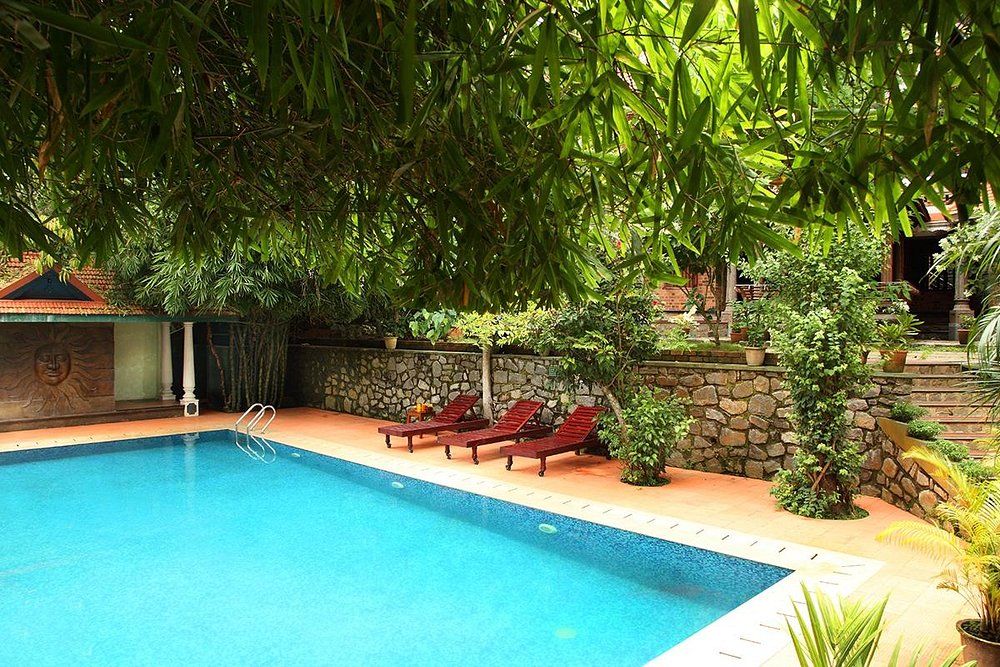
At Amrutham, an intimate eight-room sanctuary in Kovalam, Kerala, near Vellayani Lake, we hold this work the way it was meant to be held — unhurried, attentive, and rooted in the principles of M·A·Y, Meditation · Ayurveda · Yoga. A cleanse here is less a treatment you book and more a U-turn inward: a chance to feel lighter, clearer, and more grounded. If a slower, deeper reset is calling to you, our wider range of immersive retreats can frame Panchakarma within stillness and renewal.
However the myths reached you, the invitation underneath them is simple — to release what you no longer need, gently and in good hands.


