
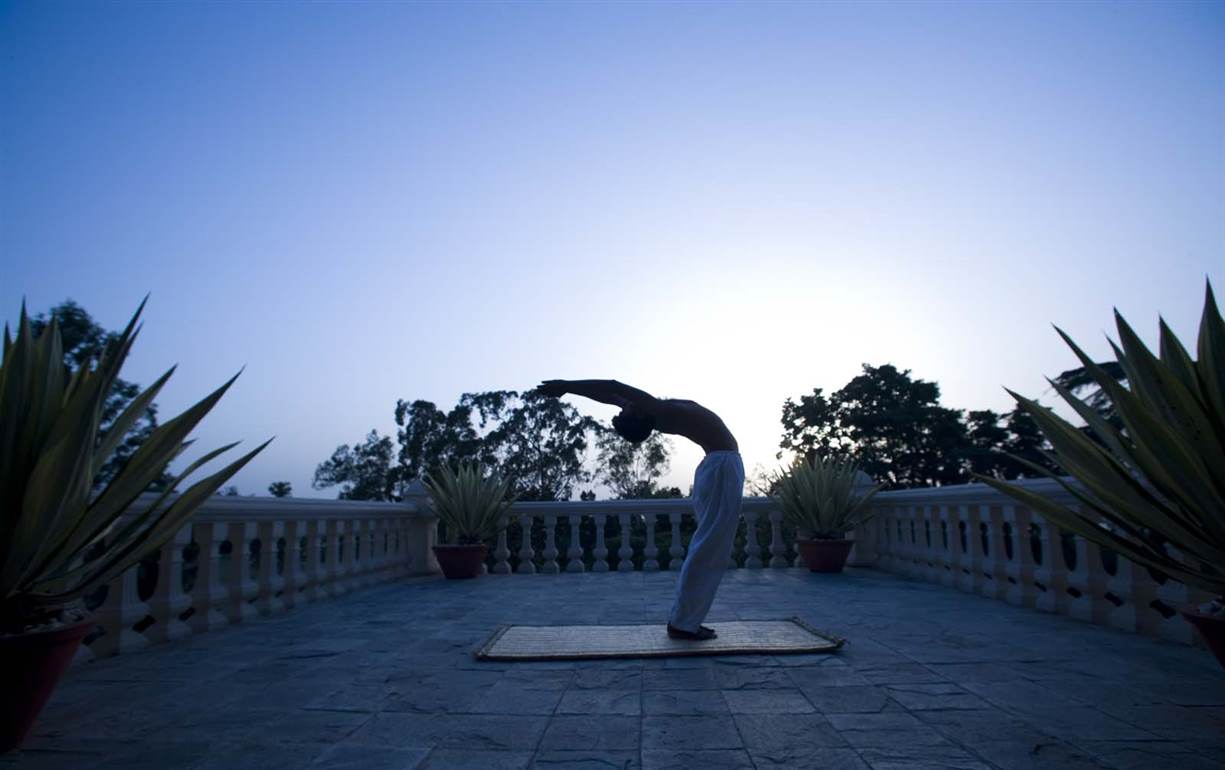
To train as a yoga teacher is to step a little deeper into something you already love. Somewhere in the years of practice, the mat stops being only a place to stretch and becomes a place to listen — and a quiet thought arrives: I would like to understand this, and one day, to share it. A 200-hour yoga teacher training is where that thought takes shape.
India draws thousands of aspiring teachers each year, and for good reason — this is the soil yoga grew from. But the choices can be overwhelming, and not all trainings are built alike. The course you choose will shape not only what you know, but the kind of teacher — and in some quiet way, the kind of person — you become. So it is worth choosing slowly. Here is an honest guide to what actually matters.
A 200-Hour Yoga Teacher Training Begins With Lineage and Curriculum
Yoga is not a single thing. It flows down through many lineages — Hatha, Ashtanga, and countless gentler regional streams — each with its own emphasis and texture. Before anything else, ask what tradition a training stands in, and whether that lineage speaks to you. A course rooted honestly in a teaching is steadier ground than one assembled from fragments to look complete.
Then look closely at what the days actually contain. A 200-hour yoga teacher training is short, and the temptation is to fill it with as many postures (asanas) as possible. The richer courses resist that. A well-built curriculum holds more than shapes:
- Asana, with care: not just performing postures but understanding alignment, the body’s limits, and how to keep a student safe.
- Breath (Pranayama) and meditation: the inner half of yoga, too often rushed — the part that turns exercise into practice.
- Philosophy and the source texts: the Yoga Sutras and the ideas beneath the poses, so you teach from understanding rather than imitation.
- Anatomy and physiology: enough to teach responsibly, and to recognise when a body needs rest rather than effort.
- The craft of teaching: sequencing a class, choosing your words, adjusting with consent, and holding a room — real practice teaching, not theory alone.
If a course lists hundreds of postures but barely mentions philosophy, breath, or the art of teaching, take that as a quiet signal. You are training to guide people, not to perform.
The faculty matter more than the brochure
In the end, a training is only as good as the people teaching it. Behind the photographs and the promises are the human beings who will sit with you, correct your posture, answer your questions, and shape how you come to understand the practice. They are who you are really choosing.
It is worth asking who they are. How long have they practised and taught? In which tradition were they trained? Do they teach the whole course themselves, or hand the harder parts to a rotation of visitors? A teacher who has lived the practice for years, and who teaches because they love to, tends to give something a polished syllabus never can. Look, too, for warmth — you will learn far more from someone patient enough to meet you where you are than from the most decorated name on a poster.
Why class size quietly shapes everything
This is the factor most easily overlooked, and one of the most important. There is a real difference between learning to teach in a hall of forty and learning it in a room of eight. In a large cohort you become a face in a crowd: your alignment goes uncorrected, your questions go unasked, your practice teaching squeezed into a few rushed minutes. In a small one, the teacher sees you — your habits, your strengths, the particular places where your body or your confidence needs care.
An intimate cohort changes the texture of the whole month. Corrections become conversations. You teach often enough to actually grow, and your feedback is specific rather than general. The other trainees stop being strangers and become a small community you learn alongside. So when you ask about a course, ask plainly: how many students are in each group? The answer tells you a great deal about how much of the teaching will reach you.
This is one reason we keep our own yoga teacher training deliberately small. With only eight rooms on the property, the cohort stays intimate by design — no trainee can disappear into the back of the room.
The setting is part of the teaching
A teacher training is not only a syllabus — it is a month of your life, lived somewhere, and where you live it matters more than most prospectuses admit. To train is to undertake your own deep practice for weeks on end: early mornings, long days, the slow unsettling and resettling of the self. That work asks for a setting that supports it.
A quiet, nature-immersed place does something a busy one cannot. When the surroundings are calm, the nervous system settles, and the deeper layers of the practice — the meditative, the contemplative, the parts that ask for stillness — finally have room to open. A noisy, party-leaning environment pulls the opposite way, scattering the very attention you came to gather. So weigh a course’s setting honestly: which surroundings would let you turn inward, and which would keep tugging you out?
Consider, too, the rhythm of the days. Is there time built in to rest, to digest what you are learning, to simply be — or is the month packed so tightly that you leave depleted rather than renewed? The best trainings honour the pace of real learning, which is rarely a sprint.
Questions worth asking before you commit
Before you decide, write to the school. How they answer — the care, the candour, the willingness to be specific — tells you almost as much as what they say:
- How large is each cohort? Small groups mean real attention; large ones rarely do.
- Who teaches, and how experienced are they? Ask about their lineage, their years of practice, and how much of the course they teach themselves.
- What does a typical day look like? Look for breath and philosophy and rest, not only back-to-back asana.
- How much will I actually teach? Genuine practice teaching, with feedback, is where confidence is built.
- What is the setting like? Quiet and contemplative, or busy and distracting? Be honest with yourself about which you need.
- What does the tuition include? Accommodation, meals, materials, certification — so there are no surprises later.
If you are still gathering your bearings, it helps to read widely first. Our broader yoga offerings and the full range of courses we hold show the spirit in which we teach — unhurried, classical, and shaped to the person in front of us — which may help you recognise what to look for in any school.
Choosing a 200-Hour Yoga Teacher Training to Begin
There is no single perfect training, only the one that is right for you — your tradition, your pace, the kind of teacher you hope to become. Trust that quiet sense of fit as much as any list of credentials. A course that meets you where you are, in a setting that lets you go inward, will teach you more than the largest or loudest name ever could.
At Amrutham, our small resort in Kovalam, Kerala — just eight rooms, set in quiet nature near Vellayani Lake, half an hour from Trivandrum airport — we hold our 200-hour yoga teacher training the way we believe it ought to be held: an intimate cohort, experienced teachers, classical roots, nourishing sattvic (pure, vegetarian) food, and the stillness that real practice asks for. It is less a course you pass through than a U-turn inward — a return to a clearer, calmer, steadier self. If that is the training you are seeking, we would be glad to welcome you.


