
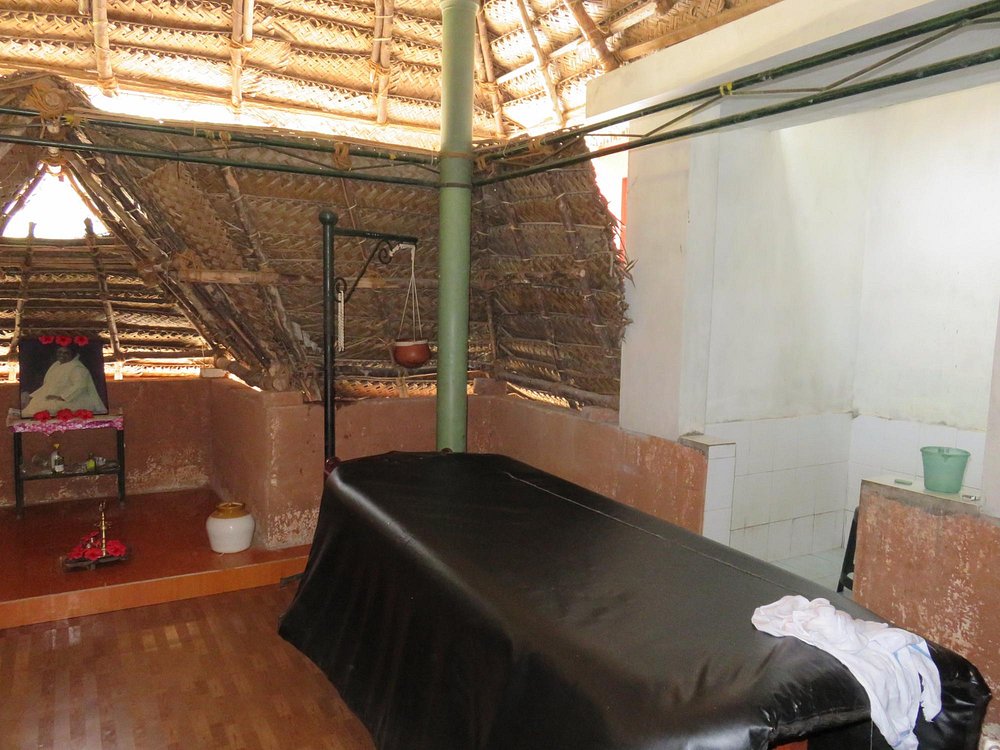
Perhaps you arrived at Ayurveda not through a stethoscope but through your own healing — a stay that softened something in you, a treatment that made you curious about the hands behind it. And now a quiet question keeps returning: could you learn to do this work yourself? If you have wondered whether a panchakarma course without medical background is genuinely possible, the honest answer is yes — provided the training is built around practice, patience, and proper guidance rather than assumed prior knowledge.
This is one of the most common worries we hear from travellers who feel drawn to Ayurveda's deeper craft. So let us walk through it together — gently, and without overstating what any course can offer.
What Panchakarma actually is
Panchakarma — literally the "five actions" — is Ayurveda's classical detoxification and rejuvenation process. Rather than masking symptoms, it aims to loosen and remove accumulated toxins (ama) so the body's natural intelligence can reassert itself. The work unfolds in three movements: preparation (purvakarma), the main cleansing actions, and a careful period of rebuilding (paschatkarma) afterwards.
Much of what a practitioner does is hands-on and observational: warming and oiling the body through massage (Abhyanga), guiding herbal steam, preparing the right oils, reading how a person responds day to day. You can read more about the tradition's history and scope through the overview of Panchakarma on Wikipedia. None of this requires a prior degree in medicine — it requires attentiveness, a willingness to use your hands, and respectful supervision.
It also asks for a particular quality of presence. Ayurveda treats a person, not a chart — so the practitioner learns to notice the small things: how the skin takes oil, how the breath settles, whether someone feels lighter or more tired as the days pass. These are skills of attention, and attention can be cultivated by anyone willing to slow down and pay it.
Why a panchakarma course without medical background is possible
Ayurveda was never the preserve of universities alone. For centuries it passed from teacher to student through apprenticeship — observing, assisting, then slowly being trusted with the work. A well-designed 21-Day Panchakarma Certification honours that lineage. It does not assume you already know anatomy or pathology; it teaches the foundations you need, in the order you need them.
A panchakarma course without medical background works because the learning is structured for beginners:
- Foundations first: the three constitutional energies (doshas — Vata, Pitta, Kapha), constitution (Prakriti), and digestive fire (agni) are introduced plainly before any technique.
- Hands-on apprenticeship: you learn the therapies by feeling them and performing them under guidance, not from a textbook alone.
- Progressive sequencing: simpler treatments such as oil massage come before more involved procedures.
- Small groups: in an intimate setting, your teacher can actually watch your hands and correct gently.
What you can realistically expect to learn
It helps to be clear-eyed. Twenty-one days is enough to build a real, working competence in the core therapies and the rhythm of a panchakarma programme — not to make you a physician. You should expect to leave able to perform foundational treatments confidently and to understand why each step matters.
- Massage and oleation: Abhyanga and the preparation that precedes deeper cleansing.
- The five actions: an understanding of the classical cleansing procedures and when each is traditionally indicated.
- Reading the body: the beginnings of assessment — observing constitution and imbalance.
- Safety and aftercare: the post-treatment regimen that makes the work sustainable rather than depleting.
A responsible programme will also be honest about scope. Panchakarma can support wellbeing and is traditionally used to relieve a range of conditions, but it is not a remedy for everything, and serious health concerns always warrant a qualified practitioner's involvement. Good training teaches you to recognise where your competence ends — itself a mark of skill.
Who tends to thrive in this training
The students who flourish are rarely the ones with the most credentials. They are the ones who arrive curious and unhurried. Over the years we have welcomed yoga teachers wanting to deepen their offering, spa and bodywork therapists seeking authentic roots, career-changers, and travellers who simply fell in love with Ayurveda during a stay and wished to carry it home.
What they share is not a diploma but a temperament: steady hands, patience with their own learning, and respect for a tradition older than any of us. If that sounds like you, the absence of a medical background is no barrier at all.
It is worth saying, too, that a beginner's mind can be an advantage. Without fixed clinical habits to unlearn, many students absorb Ayurveda's logic on its own terms — the dance of the doshas, the centrality of digestion, the idea that healing is something you support rather than impose. That openness often makes the work land more deeply.
How to prepare for a panchakarma course without medical background
You do not need to study hard before you arrive — but a little grounding helps you settle faster. Many students find it valuable to first experience the work as a guest, so that the theory has a felt reference point.
- Experience it first: a few days within our Ayurveda package or a Detox package lets you feel the therapies before you learn to give them.
- Build hand skills: some students begin with the Massage Course to grow comfortable with touch and oil before the fuller programme.
- Read gently: a beginner's introduction to the doshas is plenty; the rest is taught here.
- Come rested: this is immersive work, and arriving unhurried helps you absorb it.
If you are still weighing your path, our wider range of courses may help you find the right starting point — whether that is the full certification or a gentler first step.
Learning at Amrutham, in Kovalam
We are a small property — only eight rooms — set in the quiet near Vellayani Lake in Kovalam, Kerala, about thirty minutes from Trivandrum airport. That intimacy shapes everything about how we teach. There is no large, anonymous classroom here; there is attention, time, and the steadying rhythm of a place built for a U-turn inward.
If Ayurveda's deeper craft has been calling to you, let it. You do not need a medical degree to begin — only the willingness to learn with humble, patient hands. When you are ready, we would be glad to walk that path with you.


