
There is a particular kind of tiredness that comes from a mind that will not rest — the racing thoughts at 3 a.m., the tight chest before a meeting, the sense that some unnamed thing is always about to go wrong. If that sounds familiar, you are not broken, and you are not alone. Learning how to meditate for anxiety will not erase life's difficulties, but it can change your relationship to them — softening the grip, widening the space between a worried thought and your reaction to it.
Meditation is not about forcing the mind to go blank or banishing fear by willpower. It is a gentle, patient training in awareness — and like any training, it grows with kindness and repetition rather than strain. What follows is an honest, practical beginning, written in the spirit of how we teach it here at Amrutham.
Why anxiety responds to stillness
Anxiety is, in part, a body story. The breath shortens, the muscles brace, attention narrows to the threat. Meditation works on this loop from the inside out. By returning, again and again, to something steady — the breath, the body, a sound — you signal to the nervous system that, in this moment, you are safe. Over time this can quieten the alarm that anxiety keeps sounding.
This is not folk wisdom alone. A growing body of research explores how mindfulness practice may support people living with stress and anxious feelings. The findings are encouraging rather than dramatic — meditation is best understood as one supportive practice among several, not a substitute for medical care. If anxiety is severe or persistent, please speak with a qualified health professional; the two approaches sit well together.
How to meditate for anxiety: a simple first practice
You do not need a cushion, an app, or an hour. You need only a few honest minutes and a willingness to begin again whenever the mind wanders — which it will, many times. Here is a quiet way in.
- Settle: Sit comfortably, spine easy but upright. Let your hands rest. Close your eyes, or soften your gaze downward.
- Arrive: Take three slow breaths, letting the out-breath be a little longer than the in-breath. A longer exhale gently calms the body.
- Anchor: Rest your attention where the breath is easiest to feel — the nostrils, the chest, or the belly rising and falling.
- Notice: When you realise you have drifted into a worry, that noticing is the practice. There is no failure here.
- Return: Without judgement, bring your attention back to the breath. Begin again, as many times as needed.
Start with five minutes. Brief and regular outlasts long and rare. The aim is not a calm experience every time — some sittings will feel restless, and that is normal. The aim is the quiet strength that builds from showing up.
Working with anxious thoughts, not against them
One of the kindest discoveries in meditation is that you do not have to win an argument with your fears. When an anxious thought arrives, you can meet it the way you might meet weather — naming it gently ("planning", "worrying", "remembering") and letting it pass across the sky of awareness without being swept along.
- Label softly: A quiet inner note — "this is anxiety" — creates a little distance and reminds you that a feeling is not a fact.
- Feel it in the body: Drop beneath the story into the raw sensation — tightness, heat, flutter — and breathe around it rather than into the narrative.
- Offer kindness: A hand on the heart, a phrase like "may I be at ease", turns the practice from a battle into a befriending.
This is the heart of our A.C.E. framework — Awareness, Contentment, Equanimity. You first see the anxious pattern clearly, then learn to rest beside it, and slowly cultivate the steadiness that lets waves rise and fall without capsizing you.
Building a daily rhythm that holds you
Anxiety thrives in chaos, so a gentle daily rhythm is itself a form of medicine. Knowing how to meditate for anxiety matters less than weaving the practice into a life that supports calm. A few quiet supports help the seed take root.
- Same time, small dose: Anchor your sitting to an existing habit — after waking, before sleep — so it asks no extra willpower.
- Movement before stillness: A little yoga or a slow walk releases bracing in the body, making the mind easier to settle. Our gentle Yoga package is built to prepare body and breath in exactly this way.
- Conscious breath: A few rounds of slow, even breathing during the day are small meditations that keep the nervous system from tipping into alarm.
- Ayurvedic support: In Ayurveda, anxiety is often linked to an excess of the air-and-space energy (Vata). Warm food, regular sleep, and grounding oil massage (Abhyanga) can quietly steady an unsettled mind.
When a retreat can deepen the practice
Sometimes the noise of ordinary life is simply too loud for a new practice to find its feet. Stepping away — even for a few days — into a quiet, nature-immersed place can let the nervous system finally exhale. This is the gift of dedicated time and a held container, away from notifications and obligation.
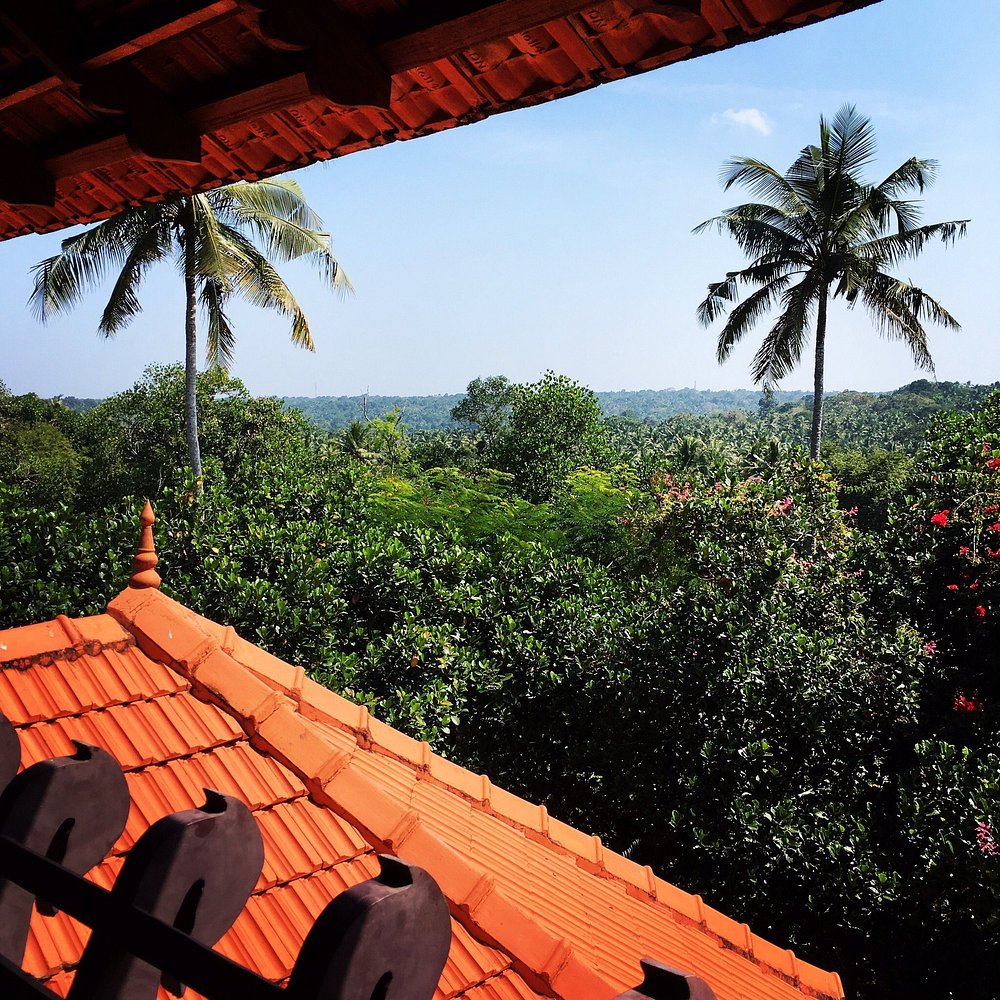
At our small eight-room retreat in Kovalam, Kerala, we hold this kind of space deliberately. Our philosophy of M·A·Y — Meditation, Ayurveda and Yoga — treats anxiety not as an enemy to defeat but as a signal to listen to. Across our retreats, meditation is woven together with classical Ayurvedic care and gentle movement, so the calm you find is supported on every side. You can read more about Amrutham and the quiet ethos behind everything we do.
A gentle word before you begin
Be patient with yourself. There will be days the mind feels like a storm and the practice feels pointless. Sit anyway, with kindness, for even a minute. The peace you are seeking is not somewhere far off — it is the quiet that is already present beneath the noise, waiting to be noticed. Learning to meditate is simply learning, again and again, to come home to it.
If your heart is asking for deeper rest, we would be honoured to walk part of that path with you. Our Signature Silent Retreat offers the spaciousness and guidance to let an anxious mind, at last, settle — a true U-turn inward, back to yourself.


