
There is a particular kind of tiredness that arrives quietly in a shared life — two people moving through their days side by side, yet rarely arriving in the same moment together. If you have felt that, a panchakarma retreat for couples can be a gentle way to set down the noise and rediscover each other — not over a candlelit dinner, but in the slower rhythm of rest, cleansing, and care.
At Amrutham, here in Kovalam by Vellayani Lake, we hold space for exactly this — a quiet, unhurried return inward, undertaken not alone but beside the person you have chosen to walk through life with.
What Panchakarma actually is
Panchakarma — literally the "five actions" — is the classical Ayurvedic process of deep cleansing, designed to clear accumulated toxins (ama) and restore balance to the body's constitution (Prakriti). It is not a spa treatment or a quick reset. It is a structured, supervised journey that traditionally unfolds in three stages: preparation, the cleansing actions themselves, and a period of gentle rebuilding afterwards. You can read a broader overview of this traditional Ayurvedic cleansing practice on Wikipedia if you would like the wider context before you arrive.
Therapies are chosen for your individual constitution, never applied off a fixed menu. Warm oil massage (Abhyanga), Shirodhara — the steady stream of warm oil poured across the forehead — herbal steam, and tailored diet all work together to coax the body back towards its own equilibrium. Because the process is individualised, two people will rarely follow identical programmes, even when they arrive together.
What sets genuine panchakarma apart is that the cleansing is bookended by care. The days before remove nothing dramatically; they soften and prepare. The days after do not simply end; they rebuild. Approached this way — traditionally used to relieve the heaviness of accumulated toxins and to restore the digestive fire (agni) — the process leaves you lighter without leaving you depleted.
Why a panchakarma retreat for couples works differently
Healing alongside someone you love changes the texture of the experience. There is comfort in being witnessed — in returning from a treatment to a familiar face, in sharing the small, surprising shifts that cleansing can bring. A panchakarma retreat for couples is less about doing everything in lockstep and more about holding a shared intention while each of you receives what your own body needs.
Modern life rarely lets two people rest at the same depth on the same days. A retreat does. When the usual roles — who cooks, who drives, who plans — fall away for a while, what is left is simpler and often tender: two people choosing to be well, in the same place, at the same time.
What couples often notice over a stay:
- Slower conversation: away from screens and schedules, the talking that matters tends to return on its own.
- Shared rhythm: rising with the light, eating sattvic (pure, vegetarian) meals together, resting deeply — a cadence that is easy to forget at home.
- Individual care, common ground: each of you follows a programme suited to your constitution, then meets the other in the quiet hours between.
- Renewed patience: when the nervous system settles, so often does the way two people speak to one another.
How a stay tends to unfold
Every programme begins with a consultation. Our practitioners read your constitution, listen to your history, and shape the days around what they find — there is no single template. From there, a typical arc moves through three classical phases.
- Preparation (Purvakarma): oleation and warmth — internal and external oils, gentle massage, and steam — to loosen toxins and ready the body.
- The cleansing actions: the specific therapies your practitioner prescribes, always supervised, always paced to your strength.
- Rebuilding (Paschatkarma): a tapering return to lighter therapies, nourishing food, and rest, so the benefits settle rather than scatter.
Because true panchakarma asks for time, our Detox & Panchakarma package is built around a meaningful stay rather than a fleeting one. If you are exploring a softer introduction first, our Ayurveda package offers rejuvenation therapies without the full cleansing arc — a gentle door for those new to the tradition.
Choosing the right programme together
Couples sometimes arrive expecting an identical itinerary. In practice, the more honest path is for each of you to be assessed on your own terms. One partner may need deeper cleansing; the other, rest and restoration. The retreat holds both. When you browse all our packages, you will see options that range from focused detox to gentler rejuvenation — and our team is glad to help you pair the right programmes so your days align even when your treatments differ.
A few honest considerations before you commit to a panchakarma retreat for couples:
- Give it time: meaningful cleansing cannot be rushed into a weekend; allow the body the days it needs.
- Expect quiet: this is a contemplative process, not a holiday of excursions — the stillness is the point.
- Speak openly: share your health history and any medication with our practitioners, and consult your own doctor before undertaking intensive therapies.
- Come as you are: there is no fitness or experience required, only a willingness to slow down.
A U-turn inward, taken side by side
Our philosophy is simple and old: Meditation, Ayurveda, and Yoga — the three threads of M·A·Y — woven into days that are calmer, clearer, and more grounded. We hold to a framework we call A.C.E. — Awareness, Contentment, Equanimity — because cleansing the body opens room for something steadier in the heart. For couples, that steadiness is a quiet gift you carry home together.
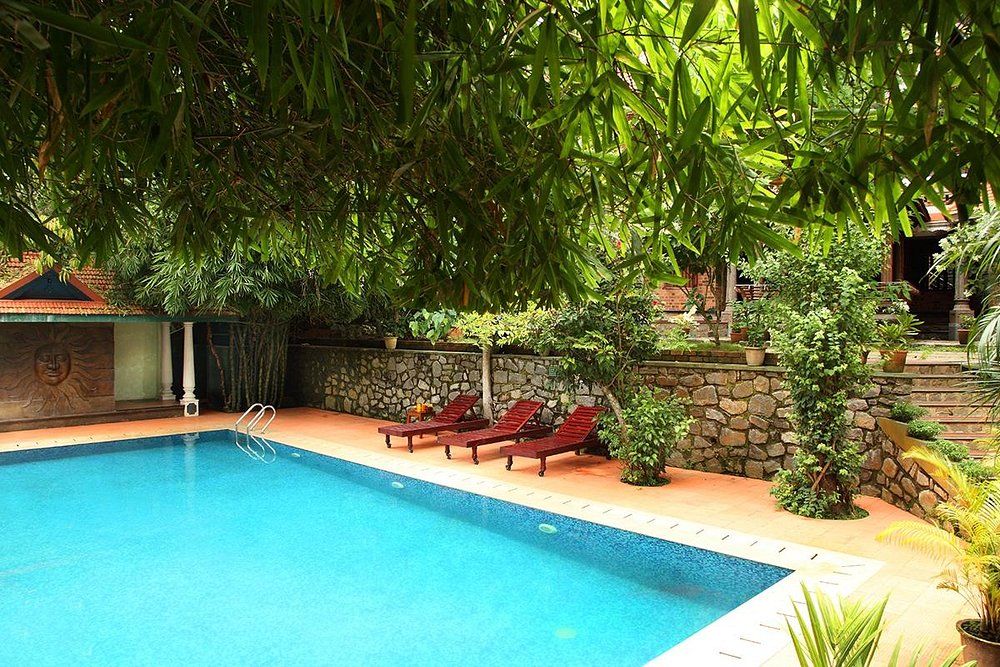
With only eight rooms, set in nature thirty minutes from Trivandrum airport, Amrutham was never built for crowds. It was built for the U-turn inward — that return to yourself, and to each other. When you are ready, you are welcome to book your stay and let us shape the days around the two of you.
Cleansing is never a substitute for medical care, and we will never oversell what it can do. But for many couples, a deliberate pause — undertaken with care, guided by tradition — becomes the moment they remember how to breathe in step again.


