
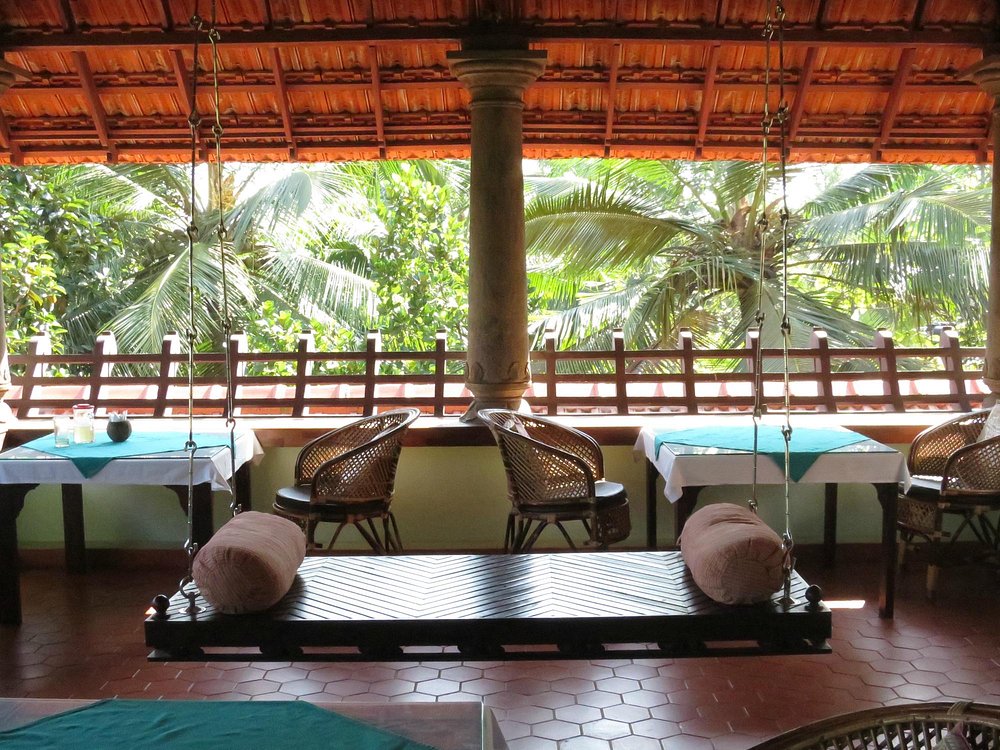
There is a particular kind of tiredness that sleep does not fix — the low hum of a mind that has not been alone with itself in years. A digital detox retreat is not about willpower or shame; it is about giving your attention somewhere quieter to land. We notice it in the guests who arrive at our gate near Vellayani Lake, thumbs still twitching for a screen that is no longer there. Within a few days, the twitch fades — and something older and steadier returns.
This is the honest case for putting the phone down: not because connection is evil, but because constant connection quietly costs you the very rest you keep scrolling to find.
What constant connectivity does to your attention
Your phone is not a neutral tool resting in your pocket — it is a small, brilliant machine designed to interrupt you. Each notification is a tiny pull on your attention, and the cumulative weight of those pulls is what researchers describe as the attention economy — an entire industry built around harvesting the minutes of your focus. The result is a nervous system that rarely settles. You sit down to rest, and your hand reaches for the screen before the stillness has even arrived.
Ayurveda has a quiet way of naming this. When the mind is perpetually stimulated, the subtle aggravation (Prajnaparadha — a kind of crime against one's own wisdom) builds, the digestive fire of the mind (agni) sputters, and rest stops being restful. You are technically off work, yet never quite off. A genuine digital detox retreat interrupts that loop — not with rules, but with a different rhythm.
What a phone-free stay actually feels like
Let us be honest about the first hours, because no one else will be. The opening evening of a phone-free stay is rarely blissful. It is restless. You reach for a pocket that is empty. You feel a flicker of anxiety — what am I missing, who needs me, what if something happens. This is normal. It is, in fact, the point. That discomfort is the sound of a habit loosening its grip.
Then, usually by the second morning, the texture of time changes:
- Mornings widen. Without the reflexive scroll, the first hour belongs to you — to breath, to birdsong over the lake, to a slow cup of warm water.
- Meals slow down. You taste the sattvic (vegetarian, clarity-promoting) food rather than photographing it. Eating becomes a sense, not a task.
- Conversations deepen. Nothing buzzes mid-sentence. People finish their thoughts; so do you.
- Sleep returns. A mind that has not been blue-lit until midnight tends to remember how to fall, and stay, asleep.
By the third or fourth day, most guests stop counting hours altogether. The relief is not dramatic; it is the absence of a pressure they had stopped noticing they carried. This is what our Silent Signature Retreat is built to protect — a container of quiet where the U-turn inward can actually happen.
Why silence is the heart of a digital detox retreat
Switching off a phone removes the noise outside. Silence addresses the noise inside — and the two work best together. A digital detox retreat that simply confiscates devices but fills the day with chatter and activity has only swapped one stimulus for another. What you are really seeking is space.
This is why we frame the deepest version of unplugging through silence. In our A.C.E. framework — Awareness, Contentment, Equanimity — silence is the doorway. Awareness asks you to notice the urge to reach, to check, to fill. Contentment is what arrives when you let the urge pass unanswered. Equanimity is the steadiness that remains. Held in quiet, near the water and the green, these are not abstract ideals; they become the ordinary weather of your days.
Practical ways to ease into a digital detox retreat
Going from a buzzing phone to total silence overnight can feel like a shock. It does not have to. A digital detox retreat is gentler — and more lasting — when you ease into it. A few practices we suggest, both before you arrive and once you are here:
- Taper, don't quit cold. In the days before you travel, mute non-essential notifications and let people know you will be slow to reply. Half the anxiety is unfinished goodbyes.
- Write the one message. Send a single note to family or colleagues with the resort's number for emergencies. Then you can truly let go, because the safety net is real.
- Replace, don't just remove. The reaching hand wants something. Carry a small journal, a book, or simply a walking path instead. We pair the quiet with Yoga, meditation, and classical Ayurveda — across our range of retreats, the day is full of gentle anchors.
- Let the body lead. Therapies such as the warm oil flow over the forehead (Shirodhara) quiet a restless mind faster than any resolution. The nervous system unwinds, and the craving to check simply weakens.
- Expect the dip. Around day two or three, a small restlessness may rise. Greet it. It is the old momentum spending itself out — and it always passes.
The body remembers how to rest
Unplugging is not only a mental relief. When the mind stops bracing for the next interruption, the body follows — shoulders soften, breath lengthens, the jaw unclenches. Ayurveda has traditionally understood deep rest as a foundation of healing, not a luxury to be earned. Our Detox programme works on the physical layer — supporting the body's own clearing of accumulated toxins (ama) — while the silence works on the mental one. Together they offer something a long weekend of sleeping in never quite delivers: a reset that holds.
None of this is a cure, and we would never claim it to be. A retreat is not medicine, and a phone is not a disease. But as a practice — a deliberate, supported pause — stepping away from the screen may support clearer thinking, steadier moods, and a kind of rest you had perhaps forgotten was possible. If you live with a health condition, we always encourage you to speak with your own practitioner before any reset.
Putting the phone down to pick yourself up
You do not need to be anti-technology to want a few days free of it. You only need to be curious about who you are when nothing is pulling at your sleeve. With only eight rooms, set in the quiet near Vellayani Lake and about thirty minutes from Trivandrum, Amrutham is small enough to make that curiosity safe — to let you be restless, then bored, then, finally, at ease.
Put the phone down. Pick yourself up. The silence is waiting, and so are we.


