
If a long dinner party leaves you quietly depleted while everyone else seems energised, a retreat for introverts may be the rarest kind of holiday — one that finally runs at your speed. Most wellness travel is built for the gregarious: shared excursions, group icebreakers, a packed social calendar dressed up as relaxation. For those of us who recover in stillness rather than company, that can feel less like a break and more like another performance. There is another way to rest.
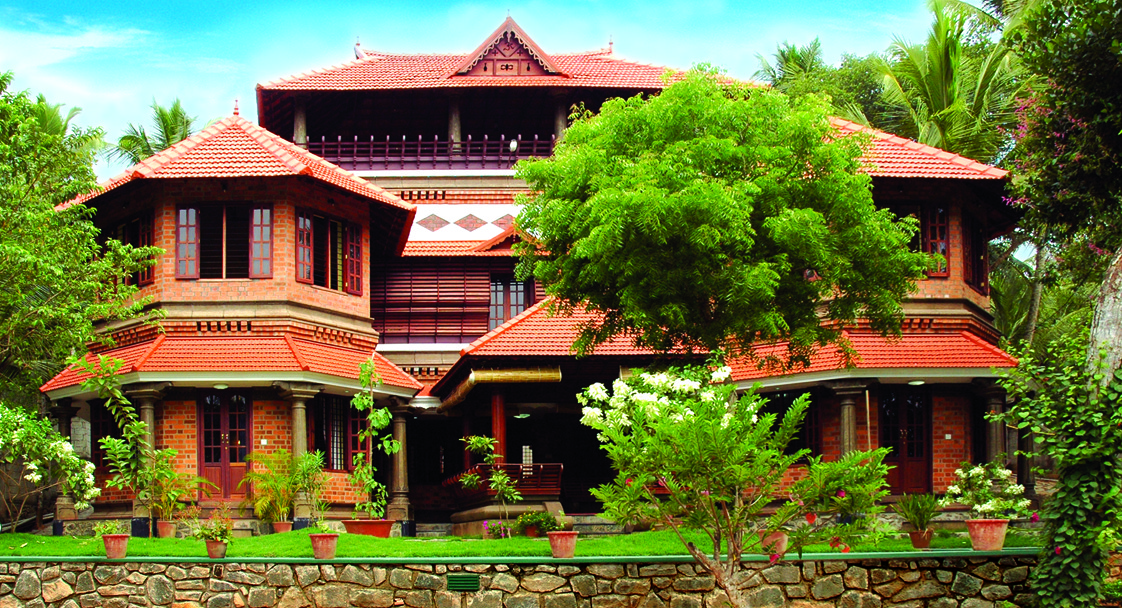
At Amrutham, our small sanctuary of just eight rooms in Kovalam, Kerala, near the calm of Vellayani Lake, we have welcomed many guests who describe themselves as introverted or highly sensitive. What they tend to want is not fixing — it is permission. Permission to be quiet, to opt out of the small talk, and to let a tired inner world settle at its own unhurried pace.
Why a retreat for introverts feels so different
Introversion is not shyness, and it is certainly not something to be cured. It simply describes where your energy comes from — and for introverts, it is replenished in solitude rather than spent there. A great deal of modern life is arranged for the opposite temperament: open-plan offices, constant availability, the expectation that you will be cheerfully "on" whenever someone walks in. By the time a holiday arrives, many introverts are not just tired; they are over-peopled.
A genuine retreat for introverts inverts those defaults. Solitude becomes the baseline, not the exception you have to negotiate. Meals can be eaten without a conversation to sustain. A walk asks nothing of you. The relief many guests feel on the first evening is almost physical — the simple discovery that, here, you do not have to explain yourself, entertain anyone, or keep the energy up.
Highly sensitive people and the cost of overstimulation
Alongside introversion, many people recognise themselves in the trait psychologists call sensory processing sensitivity, often described as being a "highly sensitive person" — an innate, perfectly healthy temperament, not a disorder. If you are highly sensitive, you notice more: subtle moods in a room, bright lights, layered noise, the emotional weather of the people around you. That depth is a gift, but it has a cost. The same nervous system that picks up so much can be flooded by it.
Overstimulation is not a character flaw to push through; it is a real load on the body. In Ayurveda, this kind of frayed, scattered state is understood as aggravated Vata (the dosha, or governing energy, associated with movement and the nervous system) — and the traditional response is not more input, but warmth, rhythm, and rest. A quiet environment lets an overstimulated system finally stop bracing. The constant background processing eases, and what surfaces is a steadier, gentler version of your own attention.
None of this is a medical treatment, and a retreat is no substitute for professional care if you are struggling. But a calm setting, paired with sattvic (pure, vegetarian) food and unhurried days, is traditionally used to help a sensitive system recover its balance. Our Ayurvedic detox programme is built around exactly this principle — lightening the load on body and mind at the same time.
The quiet permission of silence
For introverts and highly sensitive people, silence is not deprivation — it is space. When there is no conversation to maintain, the part of you that constantly monitors how you are coming across can finally rest. You stop curating. You stop anticipating the next question. The energy you would normally spend managing social interaction is simply yours again.
This is why a deliberately quiet, even silent, structure suits so many quieter temperaments. It removes the very thing that exhausts them, without ever making them feel they have failed at being sociable. Within a held, gentle silence, several things tend to soften:
- No performance: there is nothing to keep up, no version of yourself to project across a room.
- Less filtering: without a stream of conversation to process, a sensitive mind has far less to sort and absorb.
- Room to feel: emotions that were drowned out by noise and obligation can surface gently, on your terms.
It is worth saying plainly: choosing quiet over company is not anti-social, and it is not a problem to overcome. It is simply how some of us return to ourselves. Silence sits at the centre of our Silent Signature Retreat for precisely this reason — it offers rest that the talkative world rarely allows.
Why a small eight-room cohort is the real gift
Many large wellness centres frame "community" as a selling point — long communal tables, group sessions, the buzz of a full house. For an introvert, that can be the very thing that turns a restorative week into an endurance test. The size of a place matters more than its brochure ever admits.
With only eight rooms, Amrutham is deliberately intimate. A small cohort means you are never lost in a crowd, but also never trapped in one. You can be gently known by the people caring for you without being on display. Quiet acknowledgements replace forced introductions. There is space at the edge of things, which for a sensitive person is often where it feels safest to begin. A small retreat for introverts offers the warmth of being looked after without the strain of being surrounded.
That intimacy also shapes the care itself. With so few guests, attention can be unhurried and genuinely personal — the slow, classical therapies of Ayurveda, like the warm, steady stream of oil across the forehead in Shirodhara, given with time rather than to a timetable. Nothing is processed at scale, because here, almost nothing is.
How introverts and sensitive guests settle in here
If the idea of a retreat still makes you wary of being herded into group activities, a few things about how we hold the days may reassure you. The rhythm is designed to be supportive, never demanding:
- Solitude is the default: time alone is built in and honoured, not something you must justify or apologise for.
- Nature does the talking: slow walks, the lake, birdsong, and unhurried mornings ask nothing of you in return.
- Care without spectacle: therapy, yoga, and meditation are offered gently, and you are free to take only what restores you.
This is what we mean by a U-turn inward — a return to yourself that crowds and chatter can never manufacture. It is also the heart of our A.C.E. framework — Awareness, Contentment, Equanimity — which quiet introverts and sensitive guests often find unusually natural, because attentiveness and depth are already their first language.
If you are not sure whether the timing or the format is right for you, our wider retreat experiences ease you in with gentle yoga, meditation, and Ayurveda, and you are always welcome to talk to us first. We would far rather you arrive at ease than overwhelmed.
Your quiet is not a flaw to be fixed. It is simply how you are made — clearer, deeper, and more attentive when the noise falls away. When you are ready for a rest that finally lets you be that person, without apology, we have kept a place for you.


