
If you have been searching for a retreat for burnout, you already know the strange loneliness of it — the way exhaustion arrives not as a single bad day but as a slow draining of colour from everything you once loved. You push on, because pushing on is what you have always done. And somewhere underneath the achievement and the to-do lists, a quiet voice asks: is this all that there is?
Burnout is not a character flaw. It is not weakness, and it is not something you can think your way out of with one good weekend of sleep. It is, more often, a depletion of the nervous system itself — and the medicine, counterintuitive as it sounds, may be to stop. To do, for a while, almost nothing at all.
Why a retreat for burnout begins with the nervous system
Modern life keeps many of us in a near-permanent state of activation — the body's "fight or flight" response, switched on by deadlines, screens, and the quiet pressure to always be available. Helpful in short bursts, this state was never meant to be a way of living. The World Health Organization's description of occupational burnout frames it as a syndrome resulting from chronic workplace stress that has not been successfully managed — marked by exhaustion, cynicism, and reduced effectiveness.
Seen this way, burnout is less a problem of attitude and more a problem of capacity. The tank is empty. And no amount of motivation refills an empty tank — only rest does. A good retreat for burnout, then, does not try to optimise you or fix you. It does something gentler and far harder to find: it gives your overworked nervous system permission to power down, so the body's own intelligence can begin, slowly, to restore itself.
When stopping is the medicine
We live in a culture that treats rest as something you earn after the work is done — and the work is never done. So we rest badly, in fragments, with one eye on the phone. Deliberate, deep rest is different. It is not collapse and it is not indulgence. As we often say here, it is a reset — a chance to return home to yourself.
Ayurveda, the traditional system of medicine that has grown alongside Yoga for thousands of years, has long understood that healing happens in stillness, not in striving. When you stop, several things become possible:
- The body downshifts: removed from constant stimulation, the nervous system can ease out of high alert and into the "rest and digest" state where genuine repair takes place.
- Sleep deepens: many arrive exhausted yet wired. A quiet, screen-light environment and a steady daily rhythm help the body remember how to sleep.
- The mind unclenches: with nothing urgent to solve, the mental chatter that fuels exhaustion slowly loosens its grip.
- Clarity returns: only when the noise quietens can you hear what your life has been trying to tell you.
This is the "U-turn inward" at the heart of our restorative retreats — a gentle but powerful turn back toward your deeper self, away from the demands that emptied you in the first place.
What a quiet, restorative retreat for burnout actually offers
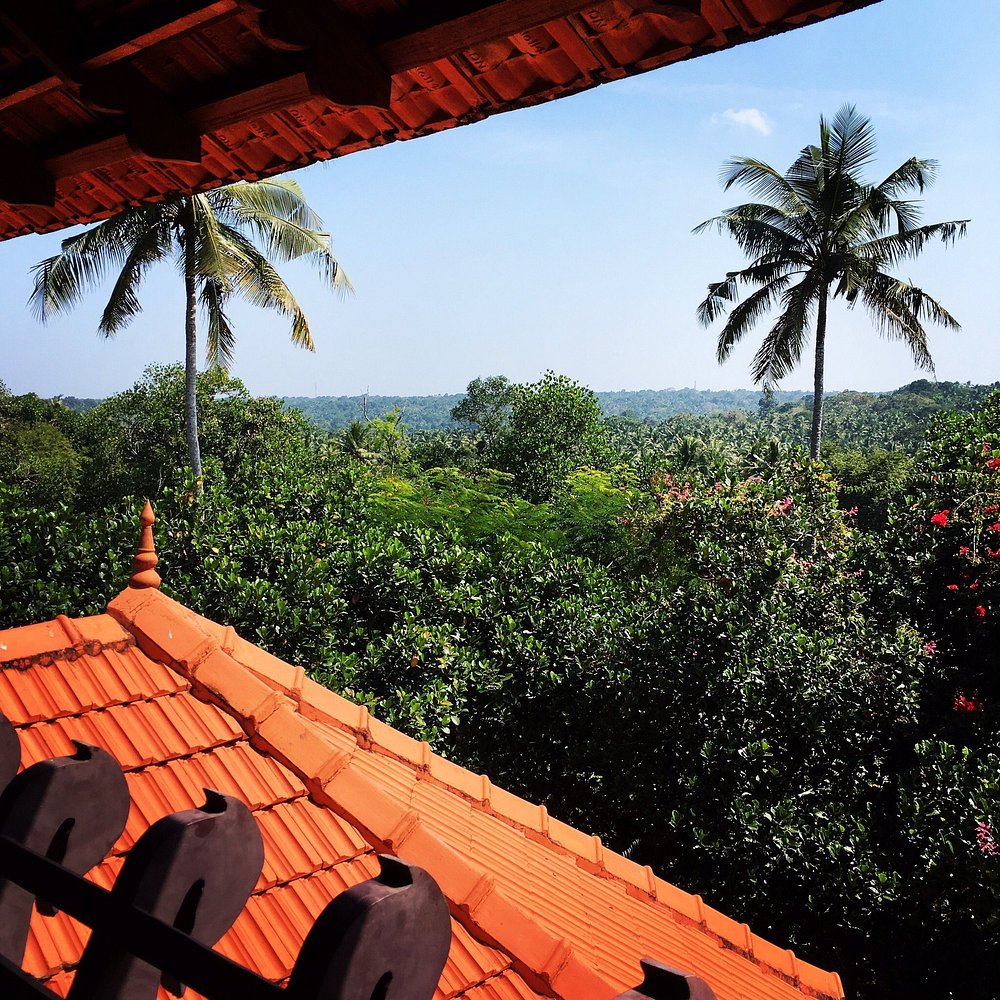
It helps to know what deep rest looks like in practice, because "doing nothing" rarely means lying in a dark room. At Amrutham — an intimate property of just eight rooms in Kovalam, Kerala, set near the calm waters of Vellayani Lake — restoration is woven into the texture of the day rather than crammed into a spa hour. Our approach rests on what we call M·A·Y — Meditation, Ayurveda, and Yoga.
- Classical Ayurvedic therapies: warm, rhythmic treatments such as oil massage (Abhyanga) and the slow, steady pouring of warm oil over the forehead (Shirodhara), traditionally used to calm an overstimulated mind and soothe the nervous system.
- Gentle Yoga and breathwork: not performance, but practices that down-regulate stress and return you to your own breath.
- Meditation and silence: structured stillness that, over days, can feel less like absence and more like relief.
- Sattvic food: simple, vegetarian, freshly prepared meals designed to be easy on the body so its energy can go toward repair.
- Nature and rhythm: unhurried days, green surroundings, and the deeply underrated medicine of having nowhere you urgently need to be.
For those carrying a specific weight of stress, our stress-relief therapies can be woven into a stay — but the foundation is always the same: less stimulation, more space, and the patience to let recovery happen at its own pace.
The discipline of doing nothing
Here is the paradox most burned-out people meet on arrival: rest is uncomfortable at first. When you have spent years measuring your worth by output, an empty afternoon can feel like a small crisis. The mind goes looking for something to fix, to plan, to scroll.
This is precisely why a structured, supported setting helps. It is far easier to truly switch off when the day already holds you — a gentle morning practice, a therapy, a slow meal, long stretches of unscheduled quiet — so you are not the one constantly deciding what comes next. Our framework here, A.C.E. — Awareness, Contentment, and Equanimity — is less a programme to complete than a direction to lean into: noticing what you feel, making peace with stillness, and finding a steadier centre that the next deadline cannot so easily shake.
When you need more than a retreat for burnout
We want to be honest with you, because honesty is part of how we care. A restorative retreat can be a turning point — a place to rest deeply, reset your rhythms, and remember who you are beneath the exhaustion. But burnout can shade into clinical depression or anxiety, and it sometimes sits alongside other health conditions that deserve proper attention.
If your exhaustion comes with persistent hopelessness, an inability to function, or thoughts of harming yourself, please reach out to a doctor or qualified mental-health professional. A retreat complements that support; it does not replace it. Rest is powerful, but it is not a cure, and there is no weakness in asking for help.
Returning to yourself
Burnout asks a hard question — can I keep living like this? — and the bravest answer is often the quietest one: to stop, for a while, and let yourself be cared for. Not as a reward, not as an escape, but as the beginning of something steadier, clearer, and more your own.
If you feel the pull to that kind of stillness, our silent, restorative Signature Retreat is designed for exactly this — deep rest, gentle structure, and the space to make your own U-turn inward. With just eight rooms, it stays intimate by design.


