
There is a particular kind of tiredness that no holiday seems to touch — the fatigue of always being available, always responding, always filling the quiet. If you have ever wondered what is a silent retreat like, the honest answer is that it feels strange before it feels like relief. The first hours are loud with everything you have been outrunning. And then, slowly, something settles.
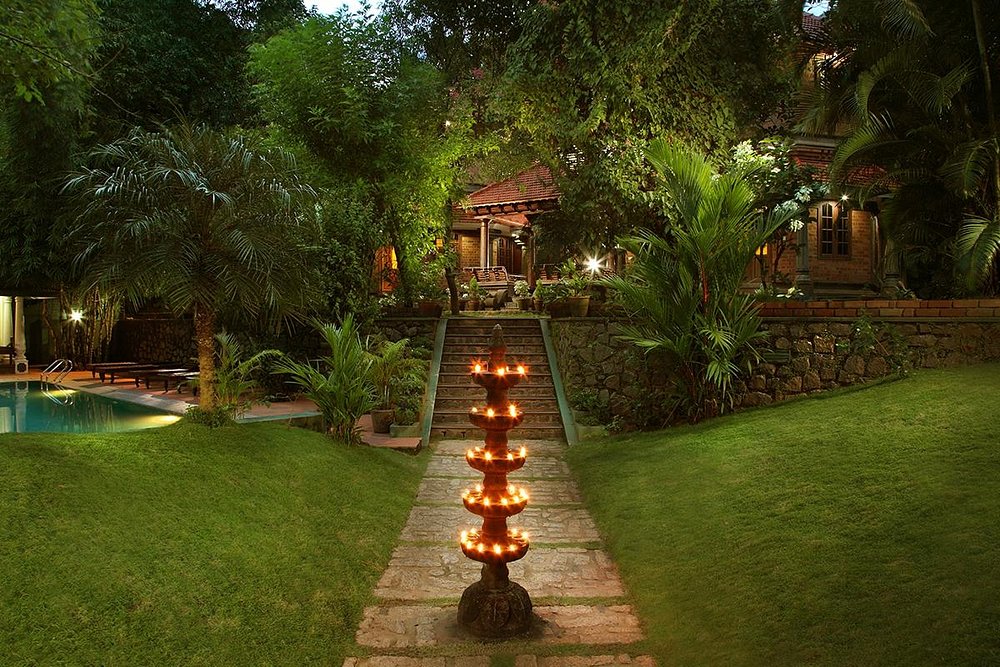
At Amrutham, in Kovalam near the still water of Vellayani Lake, silence is not a rule imposed on you. It is an invitation — a chance to stop performing conversation and simply listen, to the breeze, to your own breath, to the parts of yourself that only speak when the room goes quiet.
So, what is a silent retreat like in the first days?
Most people arrive expecting peace and meet restlessness instead. This is normal — even a good sign. When the usual distractions fall away, the mind tends to chatter louder for a while, as if testing whether the silence is real. You may feel an urge to check your phone, to explain yourself, to fill a pause that nobody is asking you to fill.
Then the texture of the day changes. You begin to notice the order in which the birds wake. You taste your food. You walk without a destination. People who ask what is a silent retreat like often imagine boredom; what they meet instead is a slow, surprising fullness — the ordinary world rendered vivid again because nothing is competing for their attention.
The practice of intentional quiet has deep roots across contemplative traditions, from monastic life to modern meditation programmes. If you are curious about its history and varied forms, the overview of the practice of silent retreats offers useful context for what you are stepping into. At Amrutham, that lineage meets the warmth of Kerala — sea air, lake light, and an unhurried pace that the place itself seems to set.
A day in the silence — what the rhythm actually feels like
Silence at Amrutham is woven into the M·A·Y philosophy — Meditation, Ayurveda, and Yoga — so the quiet is never empty. It is held within a gentle structure that gives the day shape without demanding effort. A typical rhythm might look like this:
- Early morning: waking before the heat, sitting for meditation as the light arrives, a slow walk by the lake.
- Mid-morning: gentle Yoga to loosen the body, then a sattvic (pure vegetarian) breakfast eaten in unhurried quiet.
- Midday: classical Ayurvedic therapies such as Abhyanga (warm-oil massage) or Shirodhara (a steady stream of warm oil poured over the forehead), chosen to calm an overstimulated nervous system.
- Afternoon: rest, reading, or simply being — no agenda to keep.
- Evening: light practice, a quiet meal, and an early, easy descent into sleep.
You are never truly alone in it. Qualified practitioners remain present and attentive, communicating with care so that silence never tips into isolation. This balance — supported solitude — is the heart of our Signature Silent Retreat.
Why silence and Ayurveda belong together
Ayurveda understands wellbeing as balance, and much of modern imbalance begins in an overworked mind. Constant input agitates the doshas — the bioenergetic principles (Vata, Pitta, Kapha) that govern body and temperament — and unsettles digestion of food and of experience alike. Silence is a kind of fasting for the senses. It lets the system stop reacting and begin to integrate.
When the chatter quiets, therapies land more deeply. A massage received in silence is a different experience from one taken between text messages. Stillness is what allows the body to truly receive care rather than merely tolerate it. Across many of our retreats, this pairing of inner quiet and traditional treatment is what guests remember most.
There is wisdom, too, in eating in silence. Ayurveda regards mealtimes as sacred, and the kindling of agni (the digestive fire) is helped when the mind is calm and the food is met with attention rather than distraction. A sattvic meal taken slowly, without conversation, becomes nourishment for body and temperament at once — another quiet way the days here work on you without your needing to try.
What a silent retreat may support — honestly
We make no promises of healing outcomes, and we would be wary of anyone who did. But guests, and the long contemplative tradition behind this practice, point to gentle shifts that silence can encourage:
- Clearer rest: many people find sleep deepens once the day stops demanding constant response.
- Steadier attention: without the pull of notifications, focus tends to return on its own.
- Emotional spaciousness: feelings long postponed have room to surface and soften — sometimes the most valuable part of the stay.
- A reset of pace: the nervous system remembers that not every moment must be productive.
If you live with anxiety, grief, or any significant health condition, we gently encourage you to speak with a trusted professional before a silent stay. Quiet can be tender ground, and it deserves to be entered with the right support around you.
Preparing for silence — small steps that help
You do not need experience in meditation to take this U-turn inward. A little preparation, though, makes the threshold gentler:
- Ease off slowly: in the days before, reduce screens and noise so the shift feels less abrupt.
- Let go of the productivity instinct: silence is not a task to be completed well. There is no wrong way to be quiet.
- Carry a small notebook: thoughts that would normally become conversation can rest on the page instead.
- Trust the discomfort: the restless first day usually gives way to the very calm you came for.
Many practical questions — about meals, therapies, what to bring, and how the days unfold — are answered in our frequently asked questions, and we are always glad to talk things through before you arrive.
Is a silent retreat right for you?
Silence is not withdrawal from life — it is a return to it, clearer, calmer, and more grounded. If you have been asking what is a silent retreat like because some quieter part of you is already curious, that curiosity is worth honouring. You do not need to be spiritual, fluent in Sanskrit, or already at peace. You need only a willingness to stop, for a few days, and listen.
At Amrutham — an intimate property of just eight rooms, deliberately unhurried and non-commercial — silence is offered as care, not discipline. When you are ready to step out of the noise and back toward yourself, we would be honoured to hold that quiet with you.


