
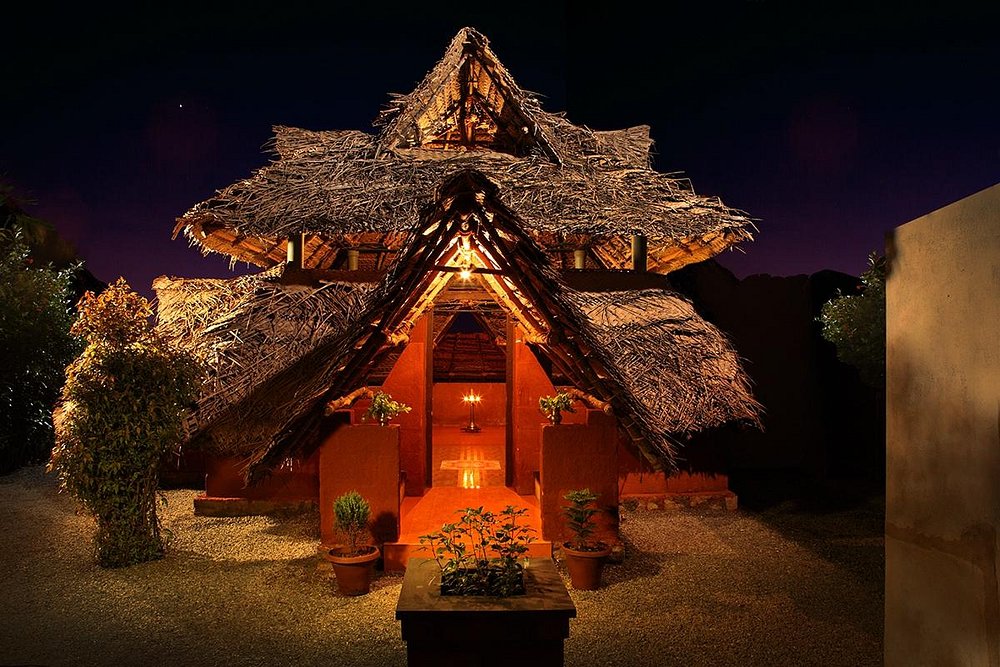
Most of us arrive imagining the Panchakarma process as a list — therapies to tick off, a schedule to follow, a result waiting at the end. What unfolds is gentler and stranger than that. It is less an itinerary and more a slow turning of the seasons inside you: first a softening, then a release, then a long, careful return to ordinary life carrying something quieter than you brought.
This is not a fixed-clock treatment, and no honest writer can hand you a minute-by-minute plan — your constitution (Prakriti), your reasons for coming, and how your body responds all shape the days. What we can offer is the shape of the experience: how a classical detox (Shodhana) tends to feel, hour by hour and week by week, when it is done with care.
The Panchakarma Process: Three Movements, Not a Checklist
The classical Panchakarma process — literally the "five actions" of deep cleansing in Ayurveda — is built in three movements, and understanding them in advance changes how the whole stay feels. Nothing here is rushed, and nothing is skipped.
- Preparation (Purvakarma): the body is warmed, oiled, and loosened so that what is lodged deep can begin to move toward the surface.
- Main therapies (Pradhanakarma): the central cleansing actions themselves, chosen and timed by a practitioner — never a menu you order from.
- Aftercare (Paschatkarma): the slow, deliberate rebuilding — gradually widening the diet, the activity, the appetite for the world.
Most people, hearing this, picture the middle as the "real" part. In practice, the preparation and the aftercare are where the felt change often lives. The arc only works whole.
Preparation (Purvakarma): the softening days
The first days are surprisingly tender. Before anything is drawn out, the body is prepared from the inside and the outside — oiled, warmed, and gently coaxed open. Two practices anchor this phase. Oleation (Snehana) saturates the tissues with medicated oils or ghee, sometimes taken internally in measured doses, so that toxins (ama) loosen from where they cling. Sudation (Swedana) then follows — therapeutic heat, often a herbal steam, that opens the channels and lets what has loosened start to flow.
What this actually feels like: a body handled with patience. There is usually a daily oil massage (Abhyanga) — long, warm, rhythmic strokes by trained therapists — and often the still pour of warm oil across the forehead (Shirodhara) that quiets a busy mind faster than almost anything else. You may feel slightly heavy or dreamy on the oleation days, a little out of step with your usual sharpness. That is the point. The diet turns simple and warm, sleep deepens, and the first thing many guests notice is not a symptom lifting but the speed at which they slow down.
Main therapies (Pradhanakarma): the release
Once the body is prepared, the central cleansing actions begin. These are the therapies the word "Panchakarma" actually names — and precisely the part you should not self-prescribe. Which actions are appropriate, in what order, and for how long is a clinical judgement made by a qualified practitioner after reading your constitution, your history, and how the preparation phase has gone. The classical set traditionally includes:
- Therapeutic purgation (Virechana): a guided clearing through the lower channels, traditionally used to settle the heat-and-metabolism humour (Pitta).
- Medicated enema (Basti): herbal-oil or decoction enemas, classically the principal therapy for the movement-and-nervous humour (Vata).
- Therapeutic emesis (Vamana): a controlled clearing of the upper channels, traditionally for the structure-and-mucus humour (Kapha).
- Nasal administration (Nasya): medicated oils through the nasal passages, often for the head, senses, and breath.
- Bloodletting (Raktamokshana): a more specialised cleansing of the blood, used selectively.
Honesty matters here. A cleansing day is not a spa day. There can be tiredness, a passing headache, an emotional tenderness that surprises you — old grief or old lightness surfacing without obvious cause. This release is the heart of the Panchakarma process, and most people describe what follows, a day or two later, as a clarity they had forgotten was available: lighter in the body, quieter in the head, more spacious in the chest. We can describe what is traditionally used and what guests commonly report; we cannot promise outcomes, and would distrust anyone who did. This is medicine with a long lineage, not a guarantee.
A day, from the inside
No two programmes share a timetable, so take this as texture rather than a schedule. Within that, the rhythm of a single day tends to settle into something like this — early, unhurried, and quietly repetitive in the way that lets the nervous system finally let go:
- Early morning: waking before the heat, often a gentle practice — breath, a little movement, stillness — to meet the day kindly.
- Mid-morning: the day's therapies, oil work, and rest. This is the body's appointment, and you keep it.
- Through the day: a warm, simple, vegetarian (sattvic) diet that supports rather than burdens the digestive fire (agni); warm water; no rushing.
- Afternoon: deliberate rest — the part travellers find hardest and need most. Reading, the lake, a long pause.
- Evening: an early, light meal, and an early night. Most guests sleep more deeply than they have in months.
The stillness is not a side effect of the schedule — it is part of the medicine. Much of what Panchakarma is for happens in the spaces where, ordinarily, you would have reached for your phone. The quiet, nature-immersed setting near Vellayani Lake is doing real work; you can read more about that intention on our About page, where the M·A·Y approach — Meditation, Ayurveda, and Yoga — is described in full.
Aftercare (Paschatkarma): the careful return
The phase people most often shortchange is the one that protects everything else. After deep cleansing, the body is open, light, and a little raw — like soil freshly turned. Rebuilding it well is what makes the benefit last beyond the flight home. This is a graded restoration (Samsarjana Krama): the diet widens slowly, from the thinnest broths back toward fuller meals, never all at once, while activity returns by degrees. Kindling foods and habits are recommended to relight the digestive fire gently, so that the lightness you have found settles into steadiness rather than fading.
Emotionally, this stretch is often the quietest and the most telling. With the busyness drained off, what remains can feel unfamiliar — clearer, calmer, and more grounded. Many guests find this is when they understand what the whole arc was for. It is also why we frame the experience as a U-turn inward rather than a treatment you receive: the return is yours to keep.
How to Picture Your Own Panchakarma Process
If you are trying to imagine your stay, a few honest expectations help more than any sample timetable. Hold these loosely, and let the practitioners shape the rest.
- Give it room: a meaningful programme is measured in weeks, not days, because the three movements cannot be hurried. Shorter visits suit gentler resets; deeper work needs deeper time.
- Begin with a consultation: nothing serious starts before a qualified practitioner has assessed your constitution and your goals. This is non-negotiable, and it is for your safety.
- Come for the rhythm, not the result: the felt change tends to arrive sideways, in sleep, appetite, and mood, more than as a single dramatic moment.
- Protect the silence: if stillness is the point, a setting built for it matters. Some guests pair their cleansing with the deliberate quiet of our Signature Silent Retreat, where the U-turn inward is given even more room.
If any of this stirs something — a sense that you have been running a little fast for a little too long — that recognition is usually answer enough. A guided Panchakarma detox at Amrutham is not a cure to be claimed or a box to be ticked. It is a structured, supported chance to soften, to release, and to return to yourself — and, with only eight rooms in a quiet corner of Kovalam, it is meant to be lived slowly.


